



INTRODUCTION
In earlier time word ‘electrocution’ was used to denote judicial execution carried out by the use of electric chair in some state of United States of America. With the passage of time this term was started being used for all deaths which involved electric current (1). Deaths caused by electrocution are comparatively infrequent compared to the amount of electricity supplied and used. Literature revealed that accidental deaths are common than suicidal and homicidal due to electrocution (2, 3, 4). Electrical injuries can be grouped into low-voltage injuries (voltage less than 1000 volts) or high voltage injuries (voltage more than 1000 volts) (5). HVEI are associated with acute injuries which include fractures, head trauma, intrabdominal injury, renal injury, soft-tissue injury and acute ocular injury (6). Vast array of serious and inevitable complications are associated with HVEI if injured person survives. Extremity loss in HEVI is extremely rare and thus deserves discussion.
CASE STUDY
A 47 year old farmer suffered HVEI injury while he was trying to steal electricity to run his tube well. He climbed on the electric pole to hook wire on the high tension wire (10,000 V). Suddenly, he slipped on high tension wire and his right forearm was dismembered. Dismembered forearm was left on the field and deceased was transferred to the hospital. During hospital stay, multiple fasciotomies were done on the left over stump and conservative management was done. Deceased expired on the 5th day owing to septicaemia.
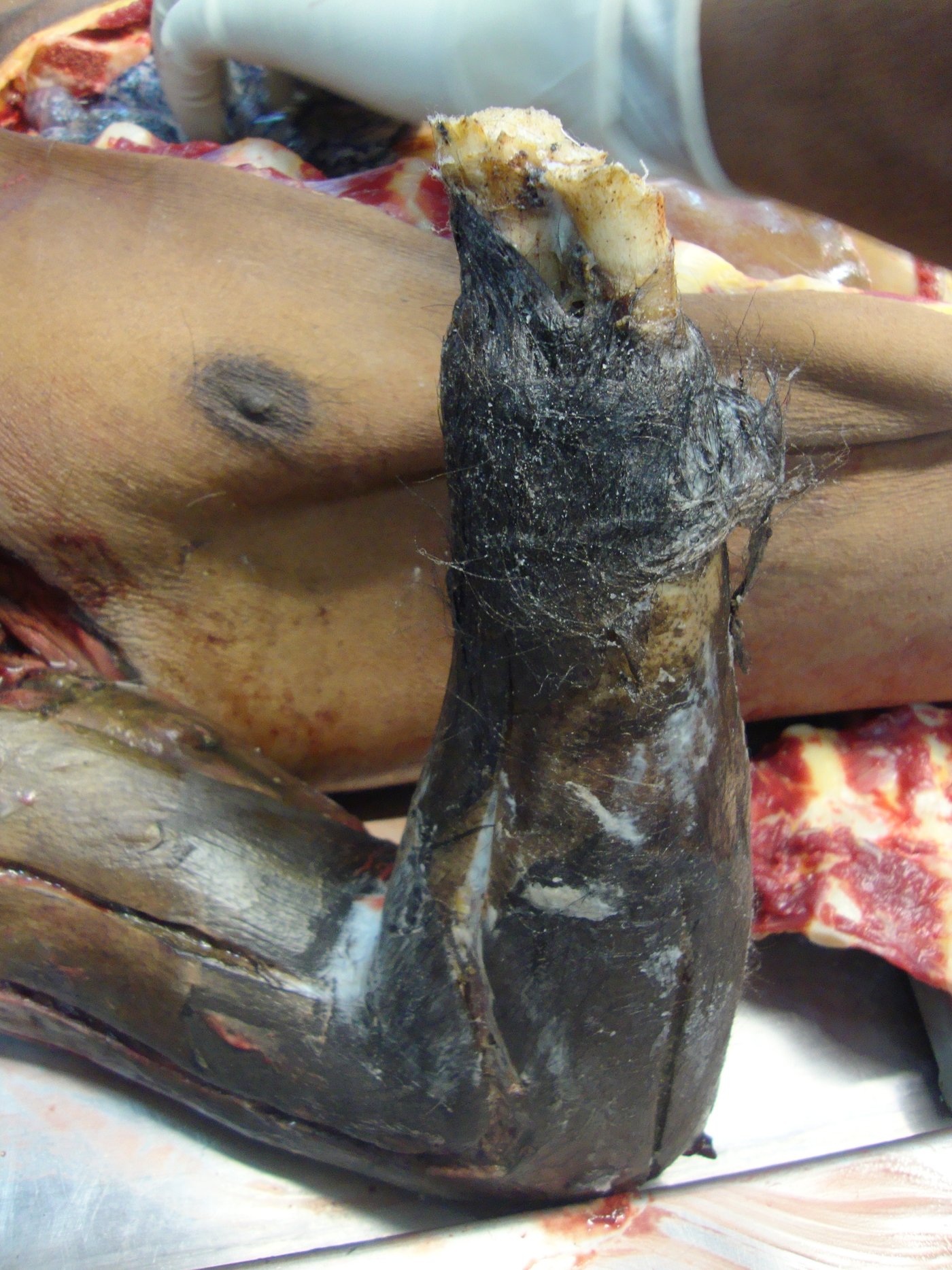
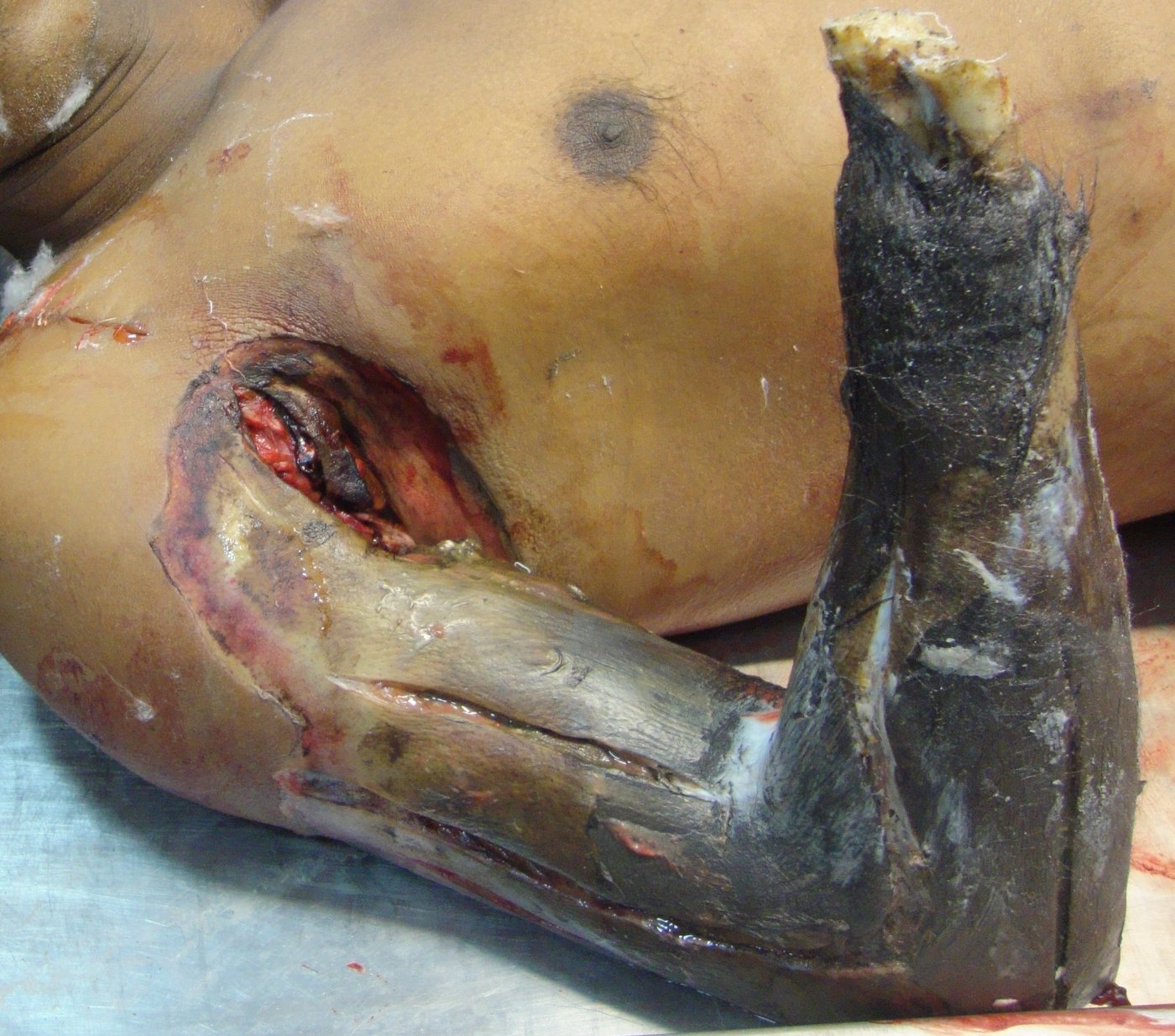
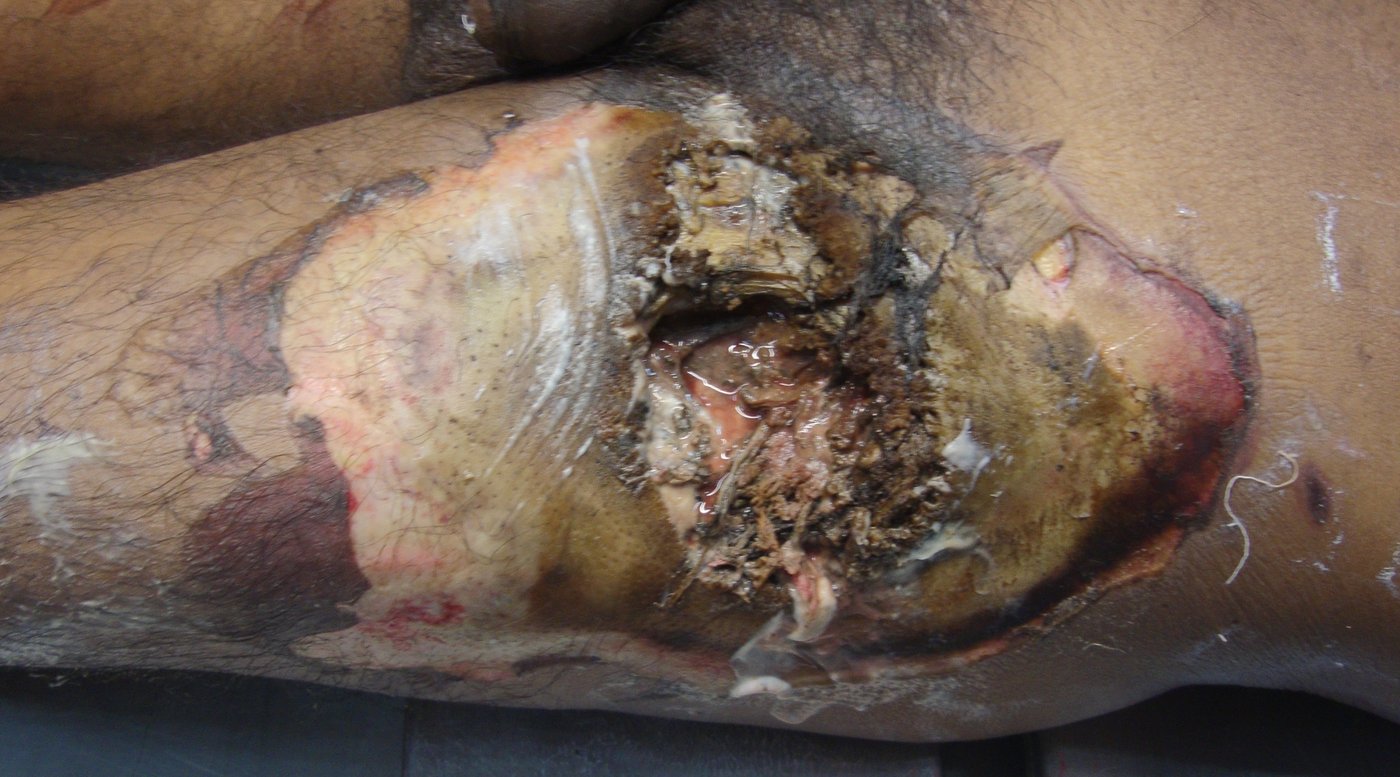
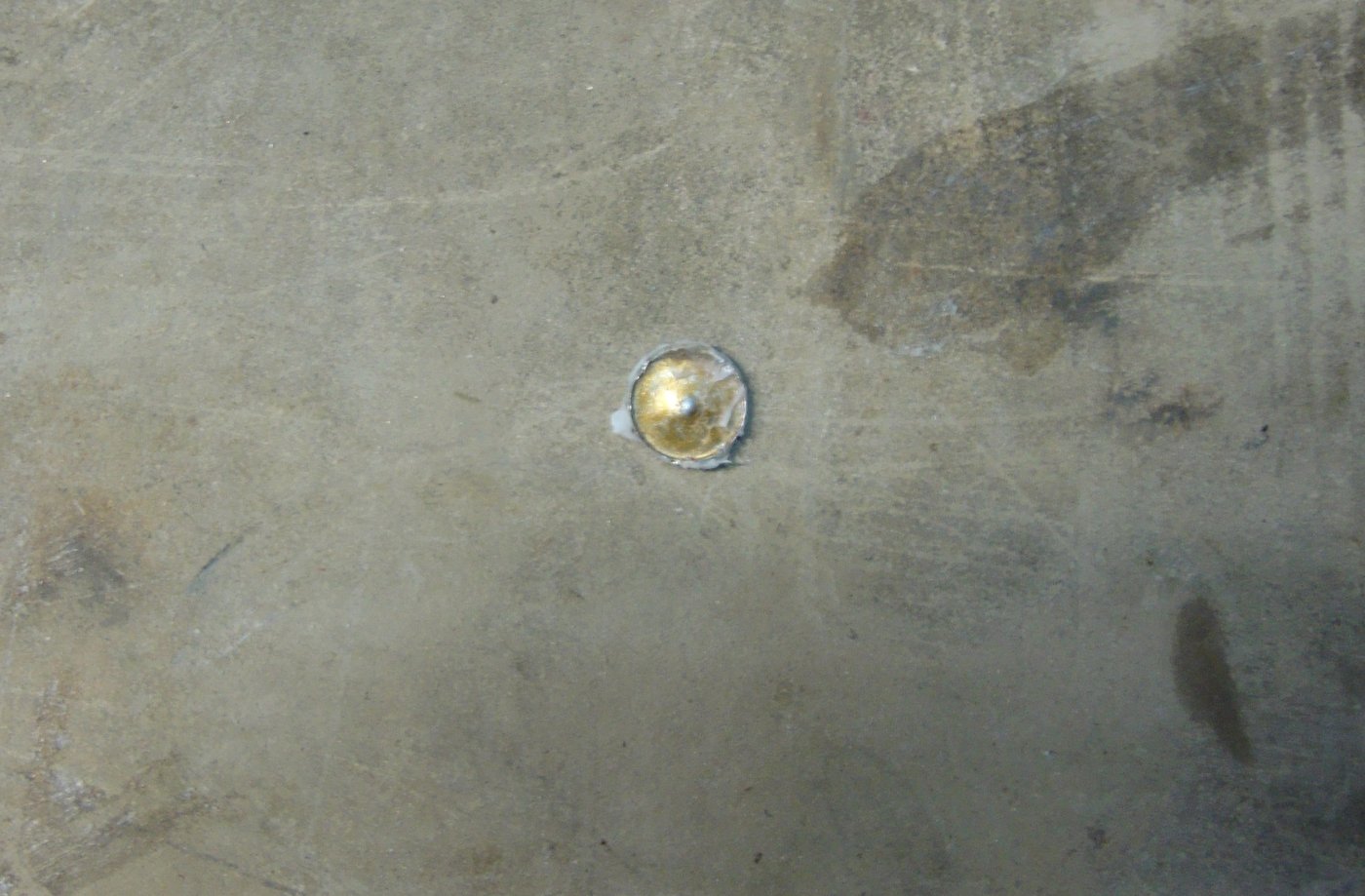
At autopsy deceased was of average built and nutrition. The right upper limb was partially missing from below elbow; the remaining stump measured 38 cms below shoulder. The stump was 12 cm × 11 cm in circumference with radius and ulna visible in a segment of 3.0 cms at the lower aspect of the stump. There was charring of the overlying muscles and the fasciotomy marks were visible over the right arm (Fig.1). Skin at the stump margins was rounded to beaded. Signs of localized infection were present at the margins of the stump. Right axillary artery was blown out at axillary region resulted in gangrenous area of 8cm × 7 cm × 1cm (Fig. 2). There was one electric contact wound, 22 cm × 18 cm was present over the front of the left upper thigh, underlying pelvic bone was visible and adjacent muscles were charred (fig 3). Electric injury exit wounds over the bilateral soles were visible as peeled off areas measuring 9 cm × 7 cm × 0.2 cm and 20 cm × 5 cm × 0.4 cm in the left and right sides respectively. A metallic chip was found on the plantar surface of left foot.
On internal examination patchy areas of consolidation were present in the apical lobes of both the lungs. Petechial haemorrhages were present on the pericardium and inter lobar aspect of both the lungs. Rest of the organs were congested.
DISCUSSION
Majority of electrocution deaths are accidental in nature, however few suicidal (7, 8) and homicidal (9, 10) electrocution deaths has also been reported. Electrical burns are most commonly seen in work related injuries and involve mainly young males. Electrical company linesman, electricians and construction workers are especially at risk (11 and 12). R. Blumenthal (2) reported 5 cases (nonsurgical/surgical) limb amputation out of 126 electrocution fatalities, but the circumstances of these 5 cases were obscured. Electrocution deaths have been reported from across the world, when a person tries to steal cable from power station (13, 14, and 15). In India especially in rural it is common to steal electricity but accidental deaths have also been reported while stealing electricity (16, 17). In the present case, victim climb pylon and suffered HEVI accidentally while trying to steal electricity from high tension wire to run his tube well.
HVEI results in extensive deep tissue damage as compared to low voltage electric injury (6). In high-voltage accidents, an electric arc may jump from high tension wire to the body and may produce burn injury. An electric arc may jump 13 cm in case 40,000 V and 35 cm in 100,000V (18). In HVEI fracture is commonly occurs but fracture may occur at 50 mA at low voltage (19, 20, 21, 22) in our case both bones of right forearm were fractured at limb was dissociated with rest of the body at voltage of 10,000. Complete loss of extremity can be explained by ‘Arc Blast’ (23) phenomenon, which resulted due to vaporizing metallic components leads to tremendous amount of heat generation. This enormous heat is sufficient to break bones and may lead to traumatic non- surgical almost immediate amputation.
The electrical energy passes through tissues that offer the least resistance, therefore of the current passes along the blood vessels (24). This results in extensive coagulation within the blood vessels causing ischemia to areas distal of the obstruction, leading to a phenomenon of arterial blow out. Few cases has been reported () in which immediate gangrene of hand and arm occur after HEVI. In this case axillary artery suffered immediate blow out and resulted in gangrenous area of its blood supply.
Cases has been reported in viscera was perforated due to directed contact with the high tension wire (5). Although in our case deep muscle were burnt but viscera was not involved.
Despite vigilance and law prevailing systems prevalent in all countries, common people can be the best resource to prevent power thefts. In Indian context, there is dire need to educate people through electronic media and work safety programs, so that electrocution fatalities can be avoided.
References
- The Essentials of Forensic Medicine. C.J.Polson, D.J.Gee and B. Knight. 4th edn. 1985(1)272-315. ↑
- R RAUTJI, A RUDRA, C BEHERA and T D DOGRA. Electrocution in South Delhi: A retrospective study. Med Sci Law 2003 43: 350. ↑
- Blumenthal R. A retrospective descriptive study of electrocution deaths in Gauteng, South Africa: 2001–2004. Burns (2009) ↑
- Sheikhazadi A, Kiani M, Ghadyani MH. Electrocution-related mortality: a survey of 295 deaths in Tehran, Iran between 2002 and 2006. Am J Forensic Med Pathol. 2010 Mar;31(1):42-5. ↑
- C. Behera, Rautji R, Dogra TD. Fatal Gastro-duodenal perforation following electrocution: A case report. J Indian Acad Forensic Med 01/2004; 32:248-250. ↑
- Lee J, Sinno H, Perkins A, Tahiri Y and Luc M. 14,000 Volt Electrical Injury to Bilateral Upper Extremities: A Case Report. MJM 2010 13(1):18-2 ↑
- Marc B, Baudry F, Douceron H, Ghaith A, Wepierre JL, Garnier M. Suicide by electrocution with low-voltage current. J Forensic Sci. 2000 Jan;45(1):216-22. ↑
- Eren B, Türkmen N, Fedakar R, Şenel B. Suicidal electrocution using a homemade electrocution device. Kathmandu University Medical Journal (2007), Vol. 5, No. 1, Issue 17, 102-104 ↑
- Al-Alousi LM. Homicide by electrocution. Med Sci Law. 1990 Jul;30(3):239-46. ↑
- Sharma LK, Sharma G, Sirohiwal BL, Khanagwal VP, Paliwal PK, Yadav DR. A bizarre case of homicidal electrocution - A case report Anil Aggrawal's Internet Journal of Forensic Medicine and Toxicology [serial online] 2005; Vol. 6, No. 2 (July - December 2005): ↑
- Maghsoudi H, Adyani Y., Ahmadian N. Electrical and Lightning Injuries. J Burn Care Res.2007;28:255–261.
- Arnoldo BD, et al. Electrical Injuries: A 20-Year Review. J Burn Care Rehabil. 2004;25:479–484.
- http://www.iol.co.za/news/crime-courts/eldorado-teen-electrocuted 1.1505578#.Ucpx9Dswdhg
- http://www.komonews.com/news/archive/4163491.html
- http://www.dailymail.co.uk/news/article-1266193/Burglar-killed-33-000-volt-shock-trying-steal-cable-electricity-substation.html
- http://articles.timesofindia.indiatimes.com/2012-11 08/gurgaon/34993245_1_power-theft-kundi-connections-free-electricity ↑
- http://in.finance.yahoo.com/photos/man-dies-while-trying-steal-photo- 151500532.html ↑
- Review USA electrocution ↑
- Tarquinio T, Weinstein, ME and Virgilio RW. Bilateral scapular fractures from accidental electric shock. J. Trauma. 1979; 19(2):132-133. ↑
- Dumas JL and Walker N, Bilateral scapular fractures secondary to electrical shock. Arch. Orthopaed & Trauma Surg, 1992; 111(5):287-8. ↑
- Stueland DT, et al., Bilateral humeral fractures from electrically induced muscular spasm. J. of Emerg. Med. 1989; 7(5):457-9. ↑
- Shaheen MA and Sabet NA. Bilateral simultaneous fracture of the femoral neck following electrical shock. Injury. 1984; 16(1):13-14. ↑
- "Publication No. 98-131: Worker Deaths by Electrocution". National Institute for Occupational Safety and Health. Retrieved 2008-08-16. ↑
- LANGWORTHY, O. R. and KOUWENHOVEN, W. B. (1932) Amer. J. Hyg., 16, 625-66. ↑