
Review · Vol. 12, No. 1
Book Reviews: Technical Books Section
ABC of Major Trauma, 3rd Edition, edited by Peter Driscoll, David Skinner and Richard Earlam. Softcover, 11.6” x 8.3” x 0.5".
John Wiley & Sons, Ltd., The Atrium, Southern Gate, Chichester, West Sussex PO 19 8SQ, England, UK [Formerly published by BMJ Books]. Publication Date 2000. x + 182 pages, ISBN-10: 0727913786; ISBN-13: 978-0727913784. Price £25.99.
Visit the Official site of this book by clicking here
Buy from Amazon by clicking here.
 |
Perhaps a Pathologist is not the best person to review a book of this type. After all my knowledge of Accident and Emergency Medicine dates back to the 1970s! On the other hand, as a person who sees death, the final result of major trauma, I may be in a position to assess this book. A large number of deaths dealt with by the average pathologist are the result of major trauma and quite a few have had surgical intervention prior to death. Whilst in the major proportion of cases surgical intervention delays death in a small proportion of cases the surgical intervention itself causes death.
Surgeons often turn up in the mortuary to study the results of their intervention, which I find is a useful exercise for both parties concerned. So it was with some interest that this reviewer accepted the ABC of Major Trauma for review.
The critical phase in any case of major trauma is generally the first two hours. The "ABC of Major Trauma" is a comprehensive guide to the management of the multiply injured patient during the first two hours after injury.
All life threatening problems are covered, the chapters being written by experts in various specialities and those who have day-to-day experience of treating patients with trauma. The book also covers subjects related to the handling of accident victims and their transport to hospital and how to deal with major accidents.
The critical phase of major trauma is covered in the first two chapters entitled ‘Initial assessment'. This is followed by a chapter on maintaining the upper airway. There then follows a number of chapters addressing problems such as Chest Injuries, Hypovolaemic Shock, Head Injuries, Maxillofacial Injuries, Spine and spinal cord, The abdomen, The urinary tract, Limb injuries, and Eye injuries . These cover all the major systems.
Trauma in pregnancy, paediatric trauma and trauma in the elderly command separate chapters. Chemical incidents and blast and firearm injuries are also covered.
There is a welcome chapter on ‘Trauma in hostile environments' which amongst other things discusses altitude sickness. Psychological trauma is also covered.
The final chapter discusses major incidents. There are a total of 28 chapters and this is a multi-author work with an impressive collection of authors.
The ABC series of books were published as single chapters in the weekly BMJ and are available in book form. The thinking behind the series is to provide a quick reference on the subject mostly for the benefit of non-specialists. The ABC series never pretends to be comprehensive texts. Neither are they ‘idiot's guides'!
They are all well-presented and well-illustrated books printed on good quality paper.
This particular book is in its third edition which no doubt reflects its popularity. It is a readable, authoritative book illustrated with good quality photographs, drawings and charts.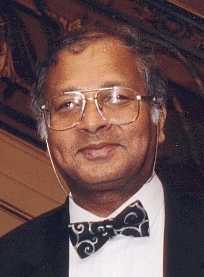 |
-Gyan Fernando Dr Gyan C. A. Fernando used to work as a Forensic Pathologist in Devon, England. He has dealt with innumerable cases of trauma is considered an undisputed authority on this subject. |
Request a PDF file of this review by clicking here. (If your screen resolution can not be increased, or if printing this page is giving you problems like overlapping of graphics and/or tables etc, you can take a proper printout from a pdf file. You will need an Acrobat Reader though.)