
Review · Vol. 6, No. 1
Book Reviews: Popular Books Section


|
|

Cracking Cases - The Science of Solving Crimes by Dr. Henry C. Lee with Thomas W.O'neil. Illustrations, Hard Cover, 6" x 9". Illustrations, Notes, Index.
Prometheus Books.. Publication Date 2002. 316 pages, Category: Popular Science, ISBN 1-57392-985-9. Price $26.00
Official site of this book: http://www.prometheusbooks.com/catalog/book_1193.html
Cracking More Cases, The Forensic Science of Solving Crimes by Dr. Henry C. Lee with Thomas W.O'neil. Illustrations, Hard Cover, 6" x 9". Illustrations, Notes, Index.
Prometheus Books.. Publication Date 2004. 313 pages, Category: Popular Science, ISBN 1-59102-199-5. Price $26.00
Official site of this book: http://www.prometheusbooks.com/catalog/book_1529.html
Please the linked page (page001ex) to read excerpts from these books.
 |
 |
|
 Both these books are by the same author and the same publisher and deal with the same subject. As such they are ideally reviewed together. The books are from Prometheus Books and are in the same style as Cyril Wecht's book reviewed elsewhere in this journal.
Dr. Henry C. Lee is of course a well-known American criminologist who has been involved in a number of high profile cases. Of the well-known cases the O.J. Simpson case is discussed in the first book and the tragic case of JonBenet Ramsey in the second book. The other cases are probably not well known outside America but are nevertheless illustrative and fascinating.
The first book discusses five cases: The Mathison Murder, The Woodchipper Murder, O.J. Simpson, The Sherman Case and The MacArthur Case. The second book discusses a further five cases including The JonBenet Ramsey Case and the Concetta "Penney" Serra Case (see below).
The Woodchipper Case will not disappoint aficionados of the really gruesome. This case involves complete disposal of a body using a woodshredder (or woodchipper, in American parlance). In America at least, until recent times it was not possible to bring in a prosecution for homicide unless a body had been found. As such this case is generally considered a landmark. Lee played an active role in this case recovering human material from a pile of woodchips.
In the case of O.J Simpson, Henry Lee was retained by the defence and claims responsibility for questioning the disgraced detective Mark Fuhrman's evidence. Quite rightly, Lee criticises the blood evidence. As most readers would know there were glaring discrepancies in the blood and blood stain evidence some of which amounted to fabrication. The finding of EDTA, a preservative, in a blood sample taken from a pair of socks is a case in point. This chapter is the best scientific analysis of the O.J. Simpson case that I have seen and is quite enlightening.
| Click here to read Excerpts from Cracking cases |
The second book carries an in-depth review of the sad case of JonBenet Ramsey. This little girl was found with a head injury and signs of strangling in the basement of the parental home. Unfortunately, the initial police investigation left a lot to be desired and the subsequent in fighting between the police and the DA did not help matters at all. Sadly, this case remains unsolved to this day. The Ramsey case is of course an example of the importance of the police investigation in the first few hours following a suspicious death. The case unfortunately started off as a kidnapping and it was only later that the body was found. This delay was to prove costly.
| Click here to read Excerpts from Cracking more cases |
A case not well known on this side of the Atlantic is the Concetta "Penney" Serra Case. When 21-year-old dental assistant Penney Serra was found brutally murdered in a New Haven parking garage in 1973, investigators used chemical enhancement to recover fingerprints from a box of tissues in the back seat of her car. It then took a chance arrest 21 years later to bring the real killer to justice. This was of course because modern day techniques such as DNA profiling were not available at that time.
Another similar old case is the Skakel-Moxley Case. After 15-year-old Martha Moxley's body was discovered near the home of Rushton Skakel in 1975, the sensational murder was unsolved for 24 years. Lee explains how his involvement in the reopened case-and his re-evaluation of key evidence-helped put Michael Skakel in prison.
Most of the cases are highly controversial but Lee's brilliant, scientific and logical analyses shine through.
Some major observations by our reviewer
& The best scientific analysis of the O.J. Simpson case that I have seen. & I found both books to be highly entertaining, very readable and quite instructive. & Lee's brilliant, scientific and logical analyses shine through. & The ability to express complex scientific matters in easy-to-understand lay terms is of course the hallmark of a good expert witness. & I would recommend both books to crime scene investigators, detectives, criminal lawyers and forensic pathologists |
Lee is a superb storyteller although one suspects that part of the credit should go to Thomas W. O'Neill who helped write both books. The style of writing is consistent and gripping. The authors take a lot of trouble to flesh out their characters giving the reader a vivid idea of the background to each case. Like in Cyril Wecht's book complex forensic matters such as blood grouping, DNA profiling and blood pattern analysis are explained in easily understandable but accurate terms. Lay readers would find this aspect of the books quite fascinating. The ability to express complex scientific matters in easy-to-understand lay terms is of course the hallmark of a good expert witness.
Having enjoyed reading both books my only worry is has Dr. Lee exhausted his casebook? I suspect not! In which case readers can expect another volume in the near future.
I found both books to be highly entertaining, very readable and quite instructive.
Published in hardback both books carry colour plates in addition to half tone illustrations. The print quality and binding are both good.
I would recommend both books to crime scene investigators, detectives, criminal lawyers and forensic pathologists. Most public libraries would want to stock these two books, as the books are likely to be of interest to fans of true crime.
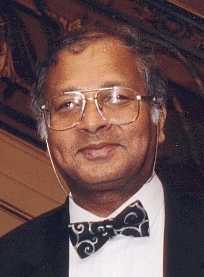 |
-Gyan Fernando Dr. Gyan C.A. Fernando is a Sri Lankan born forensic pathologist. He is now the Home Office Pathologist for Devon and Cornwall in England. His patch includes Dartmoor, which was used as the backdrop for Arthur Conan Doyle's "Hound of the Baskervilles". |
Order these Books by clicking below.
For review of Henry Lee's Crime Scene Handbook please the linked page (page009).
Request a PDF file of this review through the contact page. (If your screen resolution can not be increased, or if printing this page is giving you problems like overlapping of graphics and/or tables etc, you can take a proper printout from a pdf file. You will need an Acrobat Reader though.)