



Introduction
Nerium oleander is a common evergreen, ornamental and cultivable shrub, often found in the gardens as an informal hedge. It is known for its stalwart nature and ostentatious blooms. It is widely grown in regions of Europe like the Mediterranean, India, Sri Lanka and Nepal and is known by common names “Adelfa”, “Baladre”, “Dog bane” and “Rose bay”. Possibly, the word “Nerium” is of Greek origin which means ‘water’. In India the word “Kaner” is used for both for Nerium oleander and Thevetia peruviana. Historically the shrub finds its mention in the Bible, the Greek literature, the Assyrian medical texts and folklore for its ornamental and medicinal uses(1-3). Oleander is considered to be the city flower of Hiroshima as supposedly it was the first plant to bloom after the infamous nuclear attack of August 6, 1945 and thus encouraged the citizens in times of doom and despair(4).
Taxonomic description
Nerium belongs to the order Gentianales and family Apocynaceae. The Apocynaceae or the dogbane family has members with milky juice, smooth leaves and flowers growing in clusters. Currently, Nerium is the only genus under the dogbane family and the word Oleander has been used as an idiom for the members of Nerium oleander, N. Odorum and N. Indicum, all of which are synonymous with each other(5-8).
Plant description
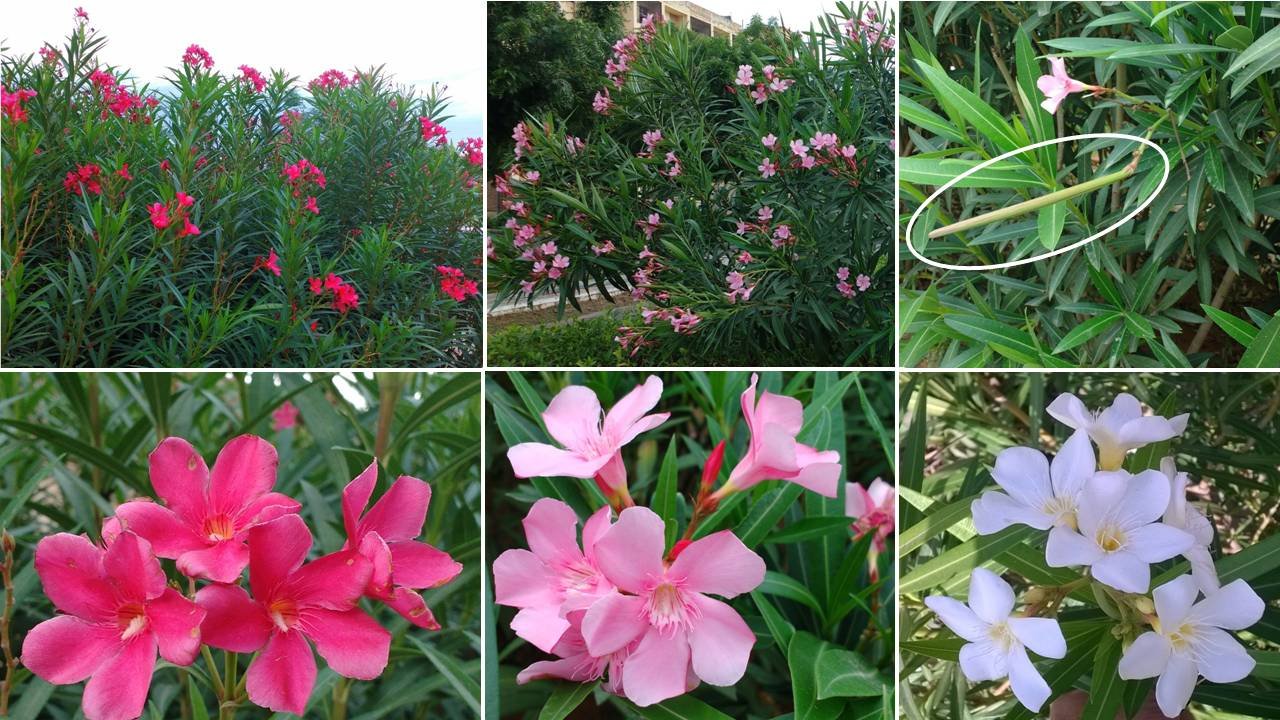
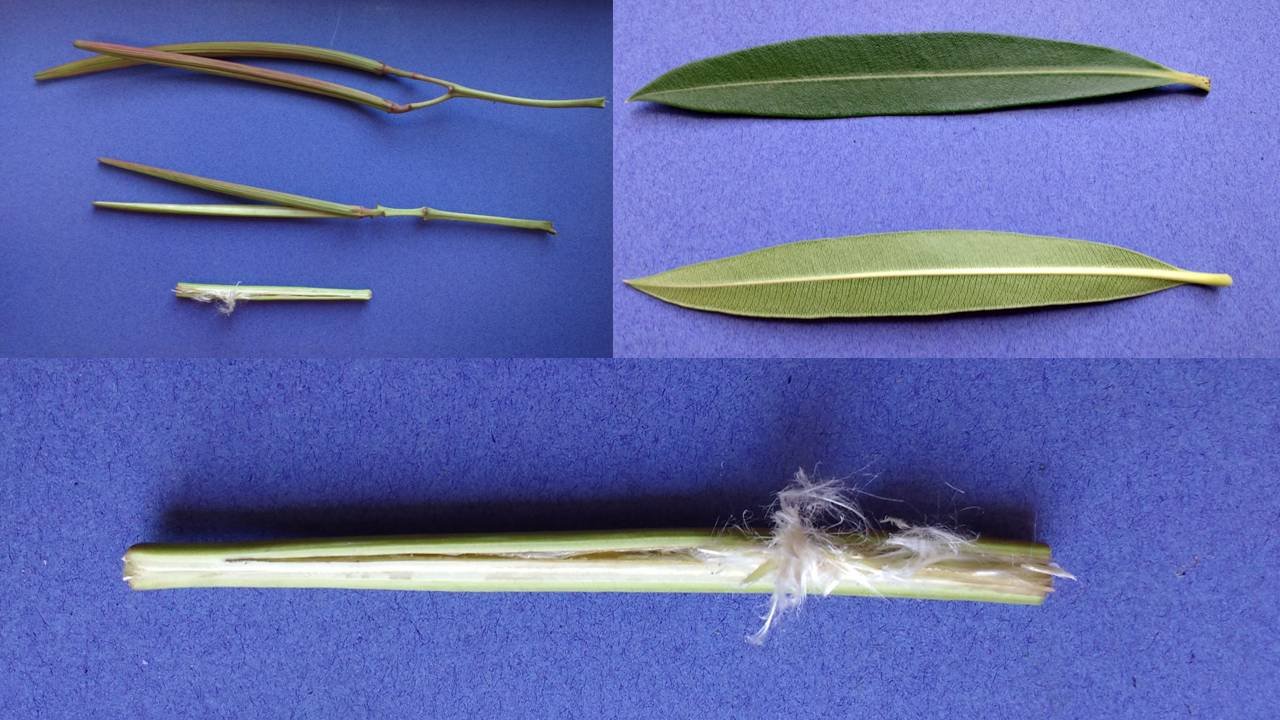
Nerium is popular in tropical and subtropical regions as a fast-growing and perennial dicot shrub. The plant is almost draught resistant and can also sustain occasional sub-zero temperatures. The plants can be commonly seen in the university campuses, gardens and at times in the wild. It can also be cultivated in the green houses in the cold climates. The plant normally grows up to three-four metres but can reach up to six to seven metres. A medium-sized shrub has a diameter of about two to three metres. The sap of the plant is gluey and clear. A typical stump of plant consists of a greyish-brown stem with numerous small branches. The stem of a branch has lanceolate and coriaceous leaves distributed in a whorl-like manner (Figure 1). The leaves have a prominent central vein and each leaf measures about 10-15 x 1-2 cm (Figure 2).. The corymb –patterned inflorescence is present at the end of stem and each plant may bear up to 100 of them. Flowers can be seen in all shades of pink, white, cream and sometimes, red and are present at the end of the stems (Figure 1). Many times same plant can bear flowers in different shades of pink. The flowers are tubular and mildly fragrant. The flowers are tubular to funnel shaped, have a diameter of one to two inches and central corolla tube with a fringe of small, slender, finger-like projections. The fruit of oleander are long cylindrical capsule and contains numerous fluffy seeds (Figure 1, 2).
Phyto-chemistry
All the parts of the plant including the bark, seeds, roots, stem, flowers and fruits are found to contain various phytochemicals(9). These parts of the plant contain a large variety of substances like saponins, flavinoids, cardenolides and pregnanes. Flavinoids and phenolic acid are found in the leaves and the flowers and are implicated in having anti-cancer and anti-microbial activity, owing to their strong microbial action. The monoglycoside type of cardinolides mostly consists of oleandrin, adynerin, alpha- adynerin, digitoxigeninglucoside, odorosides, oleandrigenin glucoside, andoleasides. Other glucosides present in various parts of the plant include nerioside,nerine and folinerin, which have cardio stimulatory action. The extract of the bark of Nerium also contain rosagenin which is known for its strychnine-like toxicity. In addition, the leaves contain triterpenes; important triterpenes include ursolic acid and oleanolic acid. Other compounds found in the plant extracts include tannins, derivatives of hexadecanoic acid and steroids.
Pharmacological uses
Various ethnomedicinal uses of Nerium have been prevalent in the traditional systems of medicines in different parts of the world, especially India, China, and certain parts of African and European continents. Traditionally and in folklore, it has been used to treat multiple ailments like asthma, heart-illnesses, seizures, diabetes mellitus, snake-bites, ulcers, leprosy, corns etc., however, its validation stills needs extensive scientific research. A major part of the research has been done on utilizing the plant extracts for treatment of cancer, that is attributed to its antimitotic and antileukemic properties(10, 11). Anvirzel™, an extract of Nerium has promising antitumor properties and has a potential to be used along with the chemotherapy and radiotherapy regimes while treating the cancer patients(12). The ethanol fractions of Nerium also have antibacterial and antifungal properties(13, 14). Interestingly, the plant extracts are shown to have potentiality against the HIV and influenza virus(15). Multiple other studies have shown that Nerium can be used in treatment of diabetes, hypertension, indomethacin-induced gastric ulcers and ischemic strokes (16-18).
Non-pharmacological uses
Besides, the popular ornamental utility, Nerium has been used for various other non-pharmacological purposes. The phytotoxins, specially the terpenes have insecticidal properties and are said to have a potential to be used as a pesticide. Studies have shown that the plant extracts have larvicidal properties too(19, 20).
Toxicology and management of poisoning
Ingestion of parts of the plants is the most common mode of poisoning, symptoms of poisoning may however, appear after dermal contact(21) and inhalation. Gastric symptoms include salivation, abdominal pain, difficulty in swallowing and vomiting that are followed by the extra-gastrointestinal symptoms. The patient may feel muscle twitching, spasm, confusion, light headedness and drowsiness. At times, visual disturbances and mydriasis may also be observed. The cardiac glycosides of Nerium resemble digitalis in action, i.e. they cause inhibition of Na+-K+ ATPase in the cardiac muscles. ECG of the patient may demonstrate atrial and ventricular fibrillations, which might progress to complete AV block in fatal cases(6). Death occurs from refractory cardiogenic shock. It has been observed that the signs and symptoms of the poisoning by Nerium may not correspond to the plasma levels of oleandrin(22).
The management of poisoning by Nerium is essentially supportive and empirical in nature. The major principle of treatment is to monitor and manage the patient hemodynamically. If the patient has reported in the earlier phase, gastric lavage by activated charcoal should be attempted. Lavage or emesis should be administered with utmost care in a patient with already existing bradycardia, as such attempts can worsen the bradycardias. Marked bradycardia and hypotension are treated with judicious use of atropine. Life threatening arrhythmias warrants use of agents like phenytoin and lidocaine. In case of AV block, placing a temporary venous pacemaker or employing the D.C. cardioversion has also been advocated. The best practise is to administer Digoxin-specific Fab antibody fragments (Fab) which is available as vials and successful attempts have been made to resuscitate the patients having history of Nerium poisoning(23).
Medicolegal implications
The toxicity of Nerium has been described in the medical, wilderness and historical literature. The sap of the plant has been used as a dart and arrow poison in the past. It has been implicated that even the honey made from the nectar of this plant (24) and the fumes of its burnt leaves can have deleterious effects on the human body. Most of the poisonings are accidental in nature, although suicidal poisoning also finds a place in the literature (5, 25). Deliberate poisoning of Nerium is rare but not unknown (26). There have been incidences where the livestock got poisoned after consumption of parts of the plant. Liking and fascination of Nerium is very obvious by its abundance in our surroundings. Hardly are people aware of the serious toxicity associated with it. Hence, it is apt to state that Nerium is an alluring murderer hiding in our vicinity.
References
- Thompson RC. Assyrian Medical Texts: II. Proceedings of the Royal Society of Medicine. 1926;19(Sect Hist Med):29-78 ↑
- Harissis HV. A bittersweet story: the true nature of the laurel of the Oracle of Delphi. Perspect Biol Med. 2014;57(3):351-60 ↑
- History of the Oleander Plant. Disabled-world2016 [cited 2016 04/09/2016]; Available from: http://www.disabled-world.com/artman/publish/oleander-plant.shtml. ↑
- Tirumalasetti J, Patel M, Shaikh U, Harini K, Shankar J. Evaluation of skeletal muscle relaxant activity of aqueous extract of Nerium oleander flowers in Albino rats. Indian Journal of Pharmacology. 2015 Jul-Aug;47(4):409-13 ↑
- Khan I, Kant C, Sanwaria A, Meena L. Acute Cardiac Toxicity of Nerium Oleander/Indicum Poisoning (Kaner) Poisoning. Heart Views : The Official Journal of the Gulf Heart Association. 2010 Oct-Dec;11(3):115-6 ↑
- Aggrawal A. Textbook of Forensic Medicine and Toxicology. First ed. New Delhi, India: Avichal Publishing Company; 2015 ↑
- Aggrawal A. Forensic Medicine and Toxicology for MBBS. First ed. New Delhi, India: Avichal Publishing Company; 2016 ↑
- Aggrawal A. Essentials of Forensic Medicine and Toxicology. First ed. New Delhi, India: Avichal Publishing Company; 2014 ↑
- Bajaj YPS. Medicinal and Aromatic Plants . Nerium Spp. In: Paper DH, editor. In vitro culture and the production of secondary metabolites: Springer; 1993. p. 230-45. ↑
- Pan Y, Rhea P, Tan L, Cartwright C, Lee HJ, Ravoori MK, et al. PBI-05204, a supercritical CO(2) extract of Nerium oleander, inhibits growth of human pancreatic cancer via targeting the PI3K/mTOR pathway. Invest New Drugs. 2015;33(2):271-9 ↑
- Calderon-Montano JM, Burgos-Moron E, Orta ML, Mateos S, Lopez-Lazaro M. A hydroalcoholic extract from the leaves of Nerium oleander inhibits glycolysis and induces selective killing of lung cancer cells. Planta Med. 2013;79(12):1017-23 ↑
- Pathak S, Multani AS, Narayan S, Kumar V, Newman RA. Anvirzel, an extract of Nerium oleander, induces cell death in human but not murine cancer cells. Anticancer Drugs. 2000;11(6):455-63 ↑
- Bhuvaneshwari L, Arthy E, Anitha C, Dhanabalan K, Meena M. Phytochemical analysis & Antibacterial activity of Nerium oleander. Anc Sci Life. 2007;26(4):24-8 ↑
- Hadizadeh I, Peivastegan B, Kolahi M. Antifungal activity of nettle (Urtica dioica L.), colocynth (Citrullus colocynthis L. Schrad), oleander (Nerium oleander L.) and konar (Ziziphus spina-christi L.) extracts on plants pathogenic fungi. Pak J Biol Sci. 2009;12(1):58-63 ↑
- Singh S, Shenoy S, Nehete PN, Yang P, Nehete B, Fontenot D, et al. Nerium oleander derived cardiac glycoside oleandrin is a novel inhibitor of HIV infectivity. Fitoterapia. 2013;84:32-9 ↑
- Benson KF, Newman RA, Jensen GS. Antioxidant, anti-inflammatory, anti-apoptotic, and skin regenerative properties of an Aloe vera-based extract of Nerium oleander leaves (nae-8(®)). Clinical, Cosmetic and Investigational Dermatology. 2015;8:239-48 ↑
- Adome RO, Gachihi JW, Onegi B, Tamale J, Apio SO. The cardiotonic effect of the crude ethanolic extract of Nerium oleander in the isolated guinea pig hearts. African Health Sciences. 2003;3(2):77-82 ↑
- Dey P, Chaudhuri TK. Pharmacological aspects of Nerium indicum Mill: A comprehensive review. Pharmacogn Rev. 2015;8(16):156-62 ↑
- El-Akhal F, Guemmouh R, Ez Zoubi Y, El Ouali Lalami A. Larvicidal Activity of Nerium oleander against Larvae West Nile Vector Mosquito Culex pipiens (Diptera: Culicidae). Journal of Parasitology Research. 2015:943060 ↑
- El-Sayed SH, El-Bassiony GM. Larvicidal, Biological and Genotoxic Effects, and Temperature-Toxicity Relationship of Some Leaf Extracts of Nerium oleander (Apocynaceae) on Culex pipiens (Diptera: Culicidae). Journal of Arthropod-Borne Diseases. 2016;10(1):1-11 ↑
- Senthilkumaran S, Saravanakumar S, Thirumalaikolundusubramanian P. Cutaneous absorption of Oleander: Fact or fiction. Journal of Emergencies, Trauma and Shock. 2009 Jan-Apr;2(1):43-5 ↑
- Al B YP, Dogan M, Kabul S, Yıldırım C. A case of non-fatal oleander poisoning. BMJ Case Reports. 2010;2010:bcr02.2009.1573 ↑
- Shumaik GM, Wu AW, Ping AC. Oleander poisoning: treatment with digoxin-specific Fab antibody fragments. Ann Emerg Med. 1988;17(7):732-5 ↑
- Dolan LC, Matulka RA, Burdock GA. Naturally Occurring Food Toxins. Toxins. 2010;2(9):2289-332 ↑
- Bandara V, Weinstein SA, White J, Eddleston M. A review of the natural history, toxinology, diagnosis and clinical management of Nerium oleander (common oleander) and Thevetia peruviana (yellow oleander) poisoning. Toxicon. 2010;56(3):273-81 ↑
- Le Couteur DG, Fisher AA. Chronic and criminal administration of Nerium oleander: J Toxicol Clin Toxicol. 2002;40(4):523-4.; 2002 ↑