
Review · Vol. 15, No. 2
Book Reviews: Technical Books Section
Essentials of Forensic Medicine and Toxicology, 1st Edition, by Anil Aggrawal. Soft cover, 11” x 8.5” x 1.5”.
Avichal Publishing company. Publication Date Jul 3, 2014.
647
pages, ISBN-13: 978-81–7739–441-2. Price: Rs 695.00.
Visit this book on Publisher's site by clicking here
Visit the companion of this book on facebook by clicking here
Request directly from publisher by clicking here.
Download sample pages from this book by clicking here
Read review of its companion book Essentials by clicking here.
Buy this book from Flipkart by clicking here
 |
The current book under review “Essentials of Forensic Medicine and Toxicology” has been written by the author in response to a large demand by the students for a comprehensive book which gives all essential information briefly and succinctly. Earlier Prof Aggrawal had written a more comprehensive “Textbook of Forensic Medicine and Toxicology”, which has already proved immensely popular.
“Essentials”, as the name suggests prunes down unessential information, and gives only what is essential for the student to understand a concept and write in exams. The book is however not a “condensed version” of the earlier book. The text has been entirely rewritten with a number of new figures and diagrams [eg pics of barbiturate blisters on page 562].
About 200 mnemonics and memory aids distributed throughout the book make the book very appealing to students. A typical mnemonic [appearing in chapter 19 on asphyxia on page 279] would illustrate the point:
|
Memory Aid 1– Classical signs of asphyxia
C C T V F o R E veryone C ongestion C yanosis T ardieu's spots [petechial hgs] F luidity of blood R t side heart engorged E dema |
The book has 3 very useful appendices. Appendix 1 deals with all relevant sections from IPC, CrPC and IEA, appendix 2 gives all fatal doses and fatal periods in a nutshell and appendix 3 gives important measurements of organs [weights, diameters etc].
The book is illustrated with very good and illustrative line diagrams.
Another good feature of the book is the neat arrangement of all information under 7 levels of heading. Each topics starts with a definition, and then goes on to list important salient features of the topic in a point wise fashion. The numbering system is very helpful to the student, and is similar to what the author used in the earlier “Textbook”. Thus a student reading, say, signs and symptoms of cyanide already knows he has to remember 8 points under CNS, 2 under CVS, 2 under respiratory system and so on.
The book gives a 2 page spread out in the beginning explaining the organization of this book. I have seen this in very few books. This is a good feature and helps the student understand the entire topography of the book, so to say.
All in all, I would say, it is a good book and students must read this book. I will certainly keep this book at hand for my own lectures and court appearances.
-Prateek Rastogi
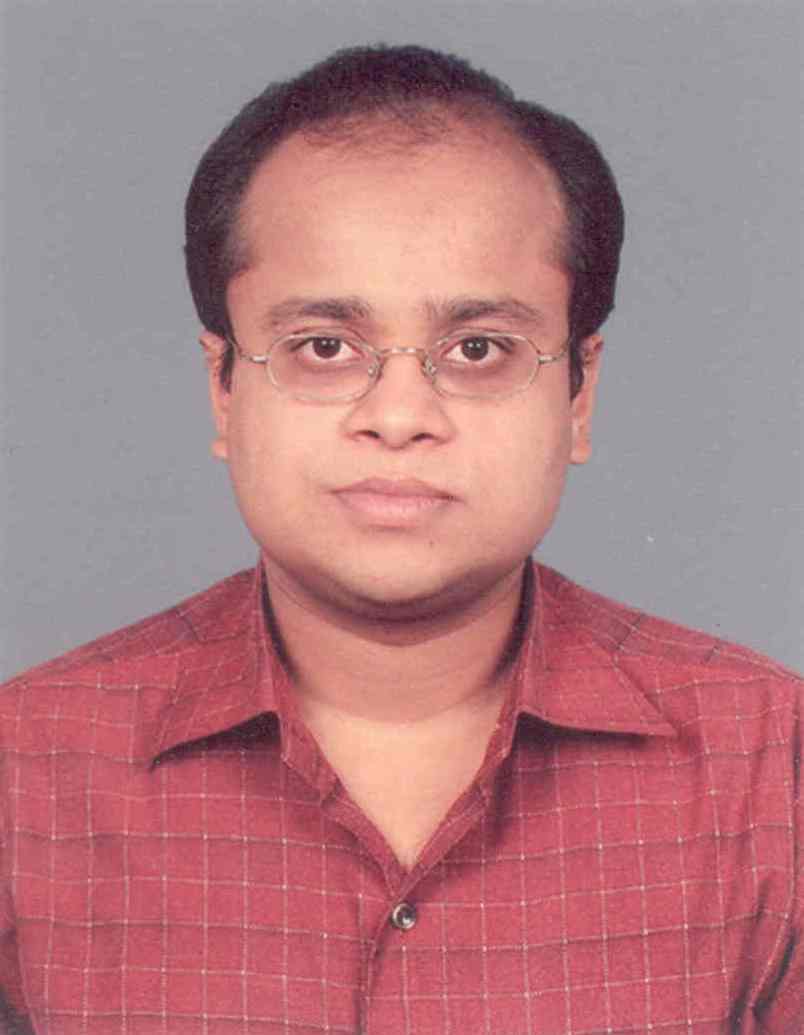 |
-Prateek Rastogi Dr. Prateek Rastogi is currently working as Associate Professor in the Dept. of Forensic Medicine & Toxicology, and as Faculty Member Medical Education Unit, Member Quality and Compliance Cell, Member Core Committee Integrated Management System (IMS), Internal Quality Auditor, Member Board of studies in Forensic Medicine, Member Board of Studies for Faculty of Medicine, Kasturba Medical College-Board 2 (Paraclinical BoS-UG & MD/MSc), Member Secretary UNESCO Bioethics cell at Kasturba Medical College, Mangalore, Manipal University, Honorary Medico legal Consultant for District Government Wenlock Hospital, Mangalore, District Medico-legal Consultant, Dakshina Kannada, India. He received his MBBS Degree in year 2002 and MD (Forensic Medicine) in 2005 from Manipal University, India. He completed Post Graduate Diploma in Medical Law & Ethics from National Law School of India University, Bangalore, Post Graduate Diploma in Criminology & Forensic Science from Annamalai University, Tamil Nadu and Diploma in Cyber Law from Asian School of Cyber Laws, Pune. He is a certificate holder in Analytical Toxicology & Forensic DNA Typing from Amrita Vishwa Vidyapeetham, Kerala, certified counsellor in Consumer Protection Act & Medical Negligence, certified counsellor in Torture Medicine from IMA AKN Sinha Institute. He has published 98 articles in National and International Journals, participated in 42 conferences and 88 CME’s to present 34scientific papers deliver 14 guest lectures at national and international level. He is a reviewer for 24 Journals, life member of 11 professional medical bodies, member of editorial & advisory board of 7 journals and 3 books. He has contributed chapters and text to three reputed Forensic Medicine textbooks. He has been awarded Young Investigator Award at 42nd Annual Conference of Asia pacific Academic Consortium of Public Health at Bali, in 2010, a certificate of appreciation for excellence in research & publications by KMC, Mangalore for 7 consecutive years since 2008, a certificate for excellence in reviewing by Journal of Forensic and Legal Medicine in 2014. He is also a recognized PhD guide in Forensic Medicine at Manipal University. Dr. Prateek Rastogi can be contacted at rastogiprateek@rediffmail.com. |
Request a PDF file of this review by clicking here. (If your screen resolution can not be increased, or if printing this page is giving you problems like overlapping of graphics and/or tables etc, you can take a proper printout from a pdf file. You will need an Acrobat Reader though.)