
Interview · Vol. 12, No. 1
Interview with Robin T. Bowen
 |
 |
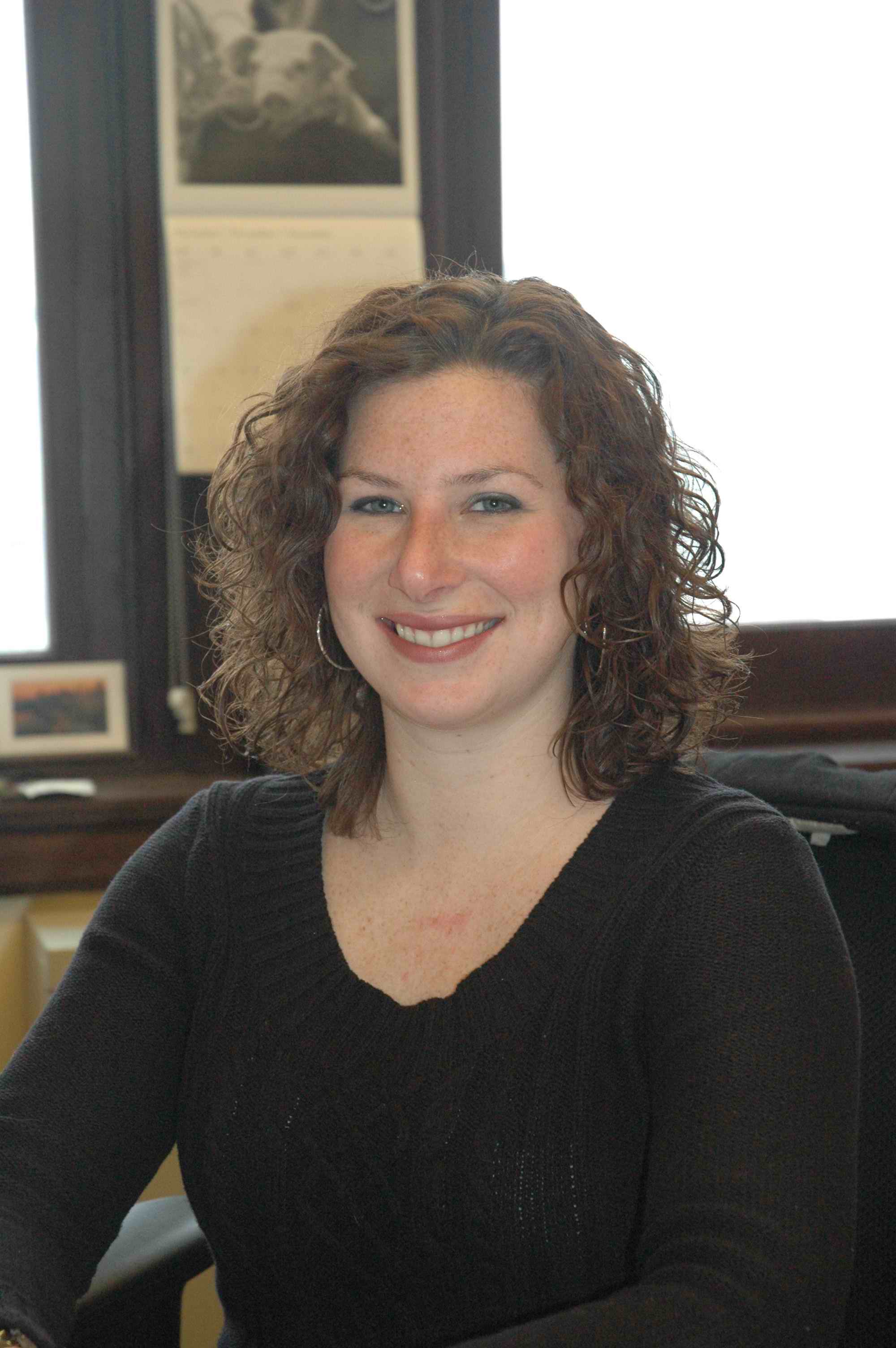
Robin Bowen is the Assistant Director for the Forensic Science Initiative at West Virginia University. This group develops research, scientific resources, and professional training for forensic scientists and related professionals through Congressionally-directed earmarks. Her primary responsibilities include coordination of continuing education programs, management of research projects, and correspondence of progress to the National Institute of Justice.
Bowen is the primary developer of the Forensic Educational Alliance, an initiative to offer a variety of forensic science continuing education courses online. The courses encompass a number of forensic disciplines and have afforded training opportunities to nearly 2,000 forensic and investigative professionals.
Bowen’s research focuses on the topic of ethics and how it is a vital part of forensic science. In 2009, ethics training and standards were determined to be a need by such reports as the National Academy of Sciences report, “Strengthening Forensic Science in the United States: A Path Forward.”
Bowen has an undergraduate degree in Forensic and Investigative Sciences and a graduate degree in Secondary Science Education. She is an Associate Member of the American Academy of Forensic Sciences, a member of the International Association for Identification, a member of the National Science Teacher’s Association, and has presented her work in trace evidence and ethics at various national meetings.
This journal reviewed her seminal work on Ethics and the Practice of Forensic Science (CRC Press, 2009) in the current issue of our journal. We at the "Anil Aggrawal's Internet Journal of Forensic Medicine and Toxicology" approached her for an online interview and she graciously agreed. The interview was conducted for well over a month. Some excerpts.. ..)
Q. 1. Can you tell our readers about the various branches of ethics?
A.  Ethics is really the application of individual’s morals and can be looked at personally, socially, and professionally. For "branches" I am not sure if I know what you are asking, but ethics is a part of (or at least should be) all professions. More simply, anything that brings individuals together for a common purpose involves individual perspectives, beliefs, and values i.e. ethics.
Q. 2. How would you define Descriptive ethics, Prescriptive ethics, Meta-ethics, and Applied ethics. Where would you place Bioethics, Environmental ethics and Business ethics within this?
 |
A. Applied ethics is the application of morals in a particular context (such as a profession as the ones you listed); normative ethics tries to determine what "normal" behaviors and actions are right or wrong; metaethics looks at the root of moral standards. For the book that I wrote, it doesn't delve too deeply into the foundation of ethics as much as it looks at how forensic professionals must maintain the utmost integrity in the face of many obstacles inherent to the field, so it is focused on applied ethics.
Q. 3. Can you give one simple hypothetical question, which a non-expert can understand easily, which is dealt with by each of the above specialties?
A. At this point, myself and Peter Barnett are the only people looking specifically at ethics in forensic science, although the forensic community is becoming much more aware of the importance of the topic. I pulled information from many sources/professions such as business ethics, medical ethics, ethics in science, ethics in law, ethics in criminal justice, etc. A question dealing with ethics (and could be applied to any specialty) that a non-expert could understand is, "How would you define common sense?" and "Do you think common sense is truly common?" These questions help people to really explore "ethics" on a very basic level. For me, these types of questions enable people to dig deeper that they may initially realize without necessarily knowing that they are dealing with ethics.s
Q. 4. In plain and simple words, can you tell our readers what moral realism is?
A. For me, moral realism is questioning moral statements to determine whether they can be tested and trusted based on a individuals beliefs.
Q. 5. What are your views on "ethics of necrophilia", or sex with the dead? I ask you this question, because recently I did a book on this subject, and could not find any material.
A. This question is not within my area of expertise. Necrophilia is illegal in the U.S. so I do not even look at it as ethical vs. unethical.
Q. 6. Can you explain to our readers in plain and simple words the concept of existentialism? Does existentialism have any role to play in forensic science?
A. Existentialism is the freedom for individuals to make choices. I think it does play a part in forensic science- each of us constantly make choices, especially in our professional lives. Some choices are minor and some are major, some are very clear cut and some have a lot of gray area and no matter what, we as individuals (accounting for the way we were raised, our culture, our beliefs, etc) ultimately make the choices, right or wrong, good or bad.
Robin T. Bowen can be approached via E-mail at robin.bowen911@gmail.com.
IMPORTANT NOTE: ALL MATERIAL APPEARING IN THIS ONLINE JOURNAL ARE COPYRIGHTED BY "ANIL AGGRAWAL'S INTERNET JOURNAL OF FORENSIC MEDICINE AND TOXICOLOGY" AND MAY NOT BE REPOSTED, REPRINTED OR OTHERWISE USED IN ANY MANNER WITHOUT THE WRITTEN PERMISSION OF THE WEBMASTER