The authors present a case, where a victim was strangled and buried deep in earth. His body was recovered by the police four months after burial. Yet the authors could demonstrate the tell-tale ecchymosis in whatever remained of the neck. The case illustrates the importance of a thorough postmortem examination in cases such as this, where there is a long postmortem interval between death and postmortem examination. The authors stress that a through postmortem examination can reveal the cause of death in virtually any case - even though presented very late to the autopsy surgeon.
Keywords: Strangulation, ecchymosis
Case Report
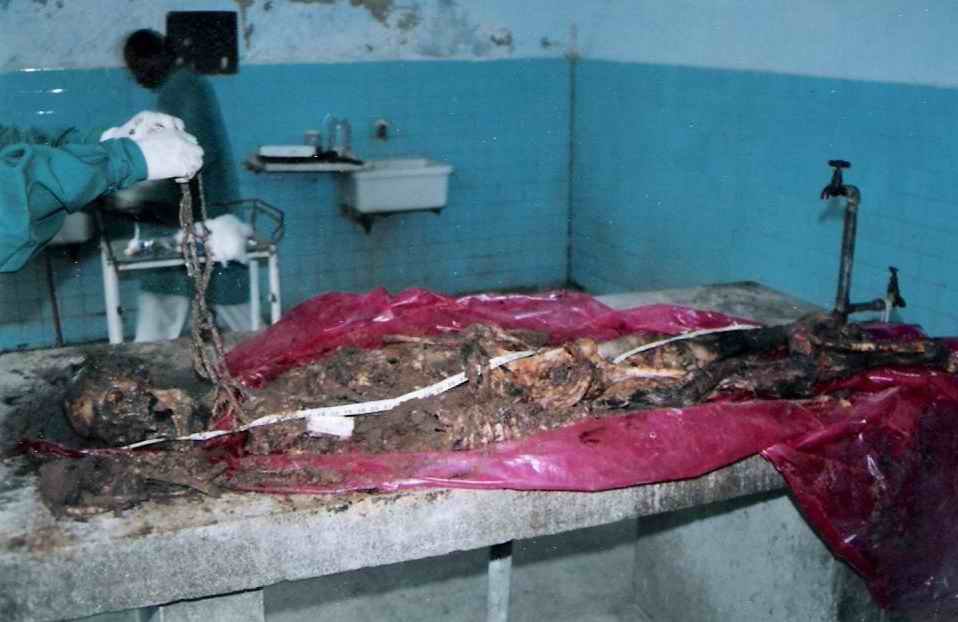
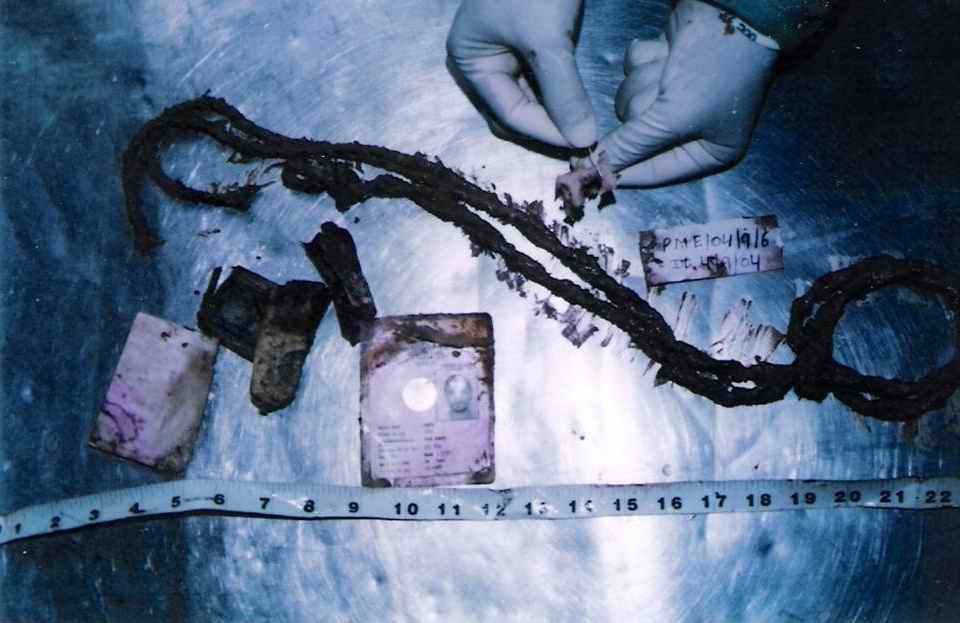
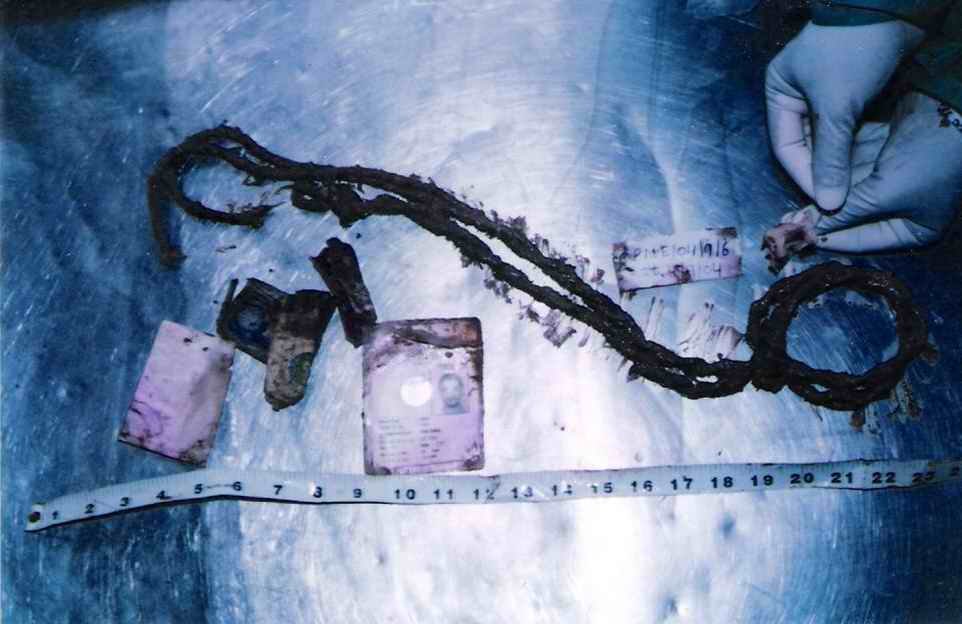
Figure 1. Depicting the dead body (almost skeletonized) with the rope (ligature material) lifted up for better appreciation.
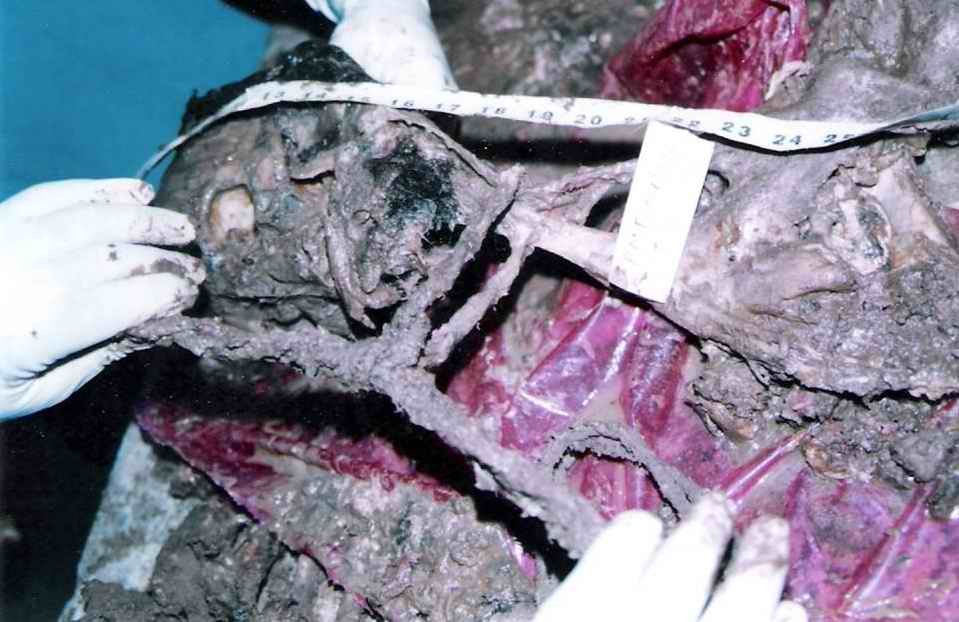
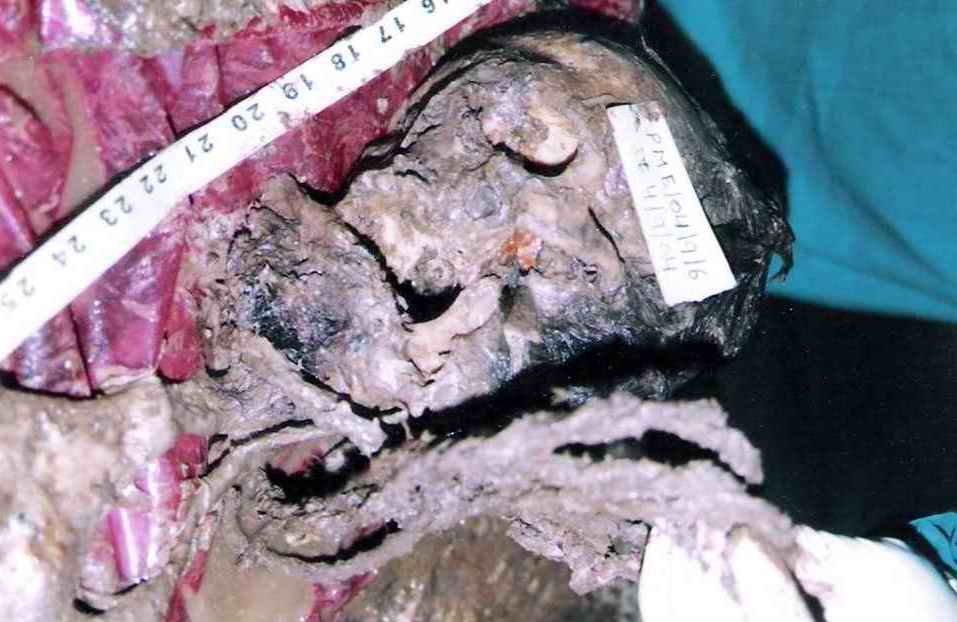
Figure 2a and 2b. Close up view of the head and neck area with only few putrefied tissues remaining with ligature material in situ.
A case was referred to the department of Forensic Medicine alleging that the husband of a woman was missing from their house for 4 months. A First Information Report (FIR) had been lodged about the same by the relatives of the missing man. Later it was discovered that the missing person was in a habit of torturing his wife under the influence of alcohol and quarreled frequently as both of them wanted to marry their daughter off to different persons (the daughter's choice wasn't asked by either of the father or the mother).
After the disappearance of the husband, his wife left the village. The investigating agencies got suspicious and interrogated her regarding the whereabouts of her husband. With tears in her eyes she confessed that she had strangled him and later buried him in their house with the help of her cousins. On further probing she told that she prepared the loop, put it in her husband's neck and pulled it while he was in a drunken stage. The pit had been dug by her cousins, after putting the body inside, it was filled with mud and soil. On her identification of the place of burial, the body was dug out by the police and subsequently sent for post-mortem examination at this centre after 4 months.
Reconstruction
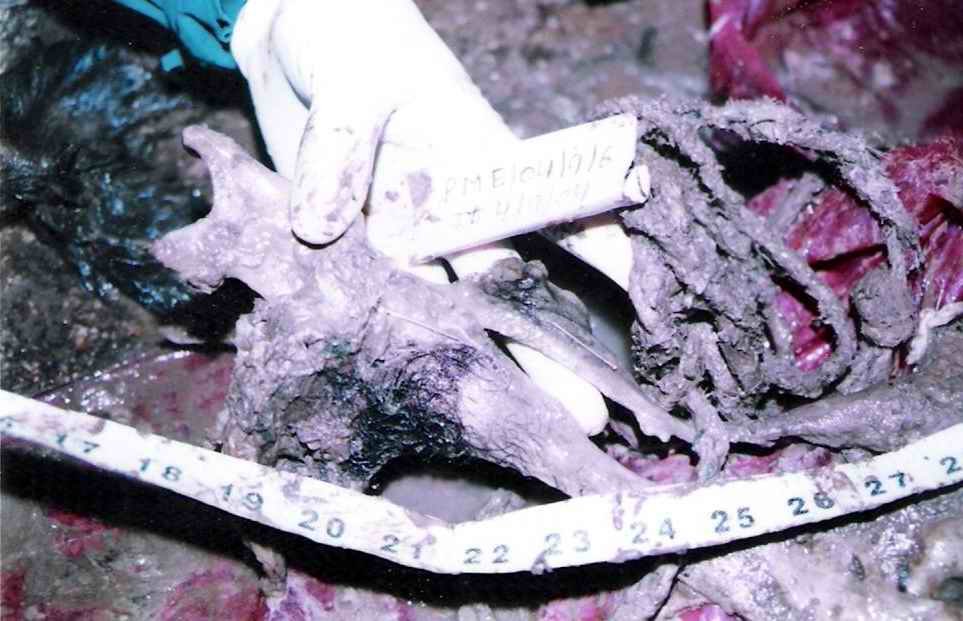
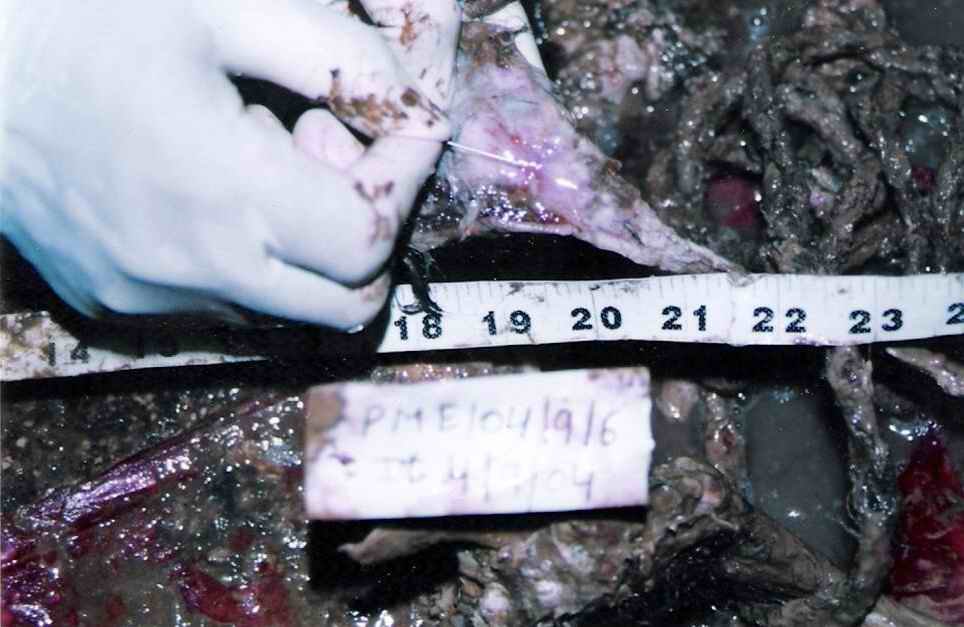
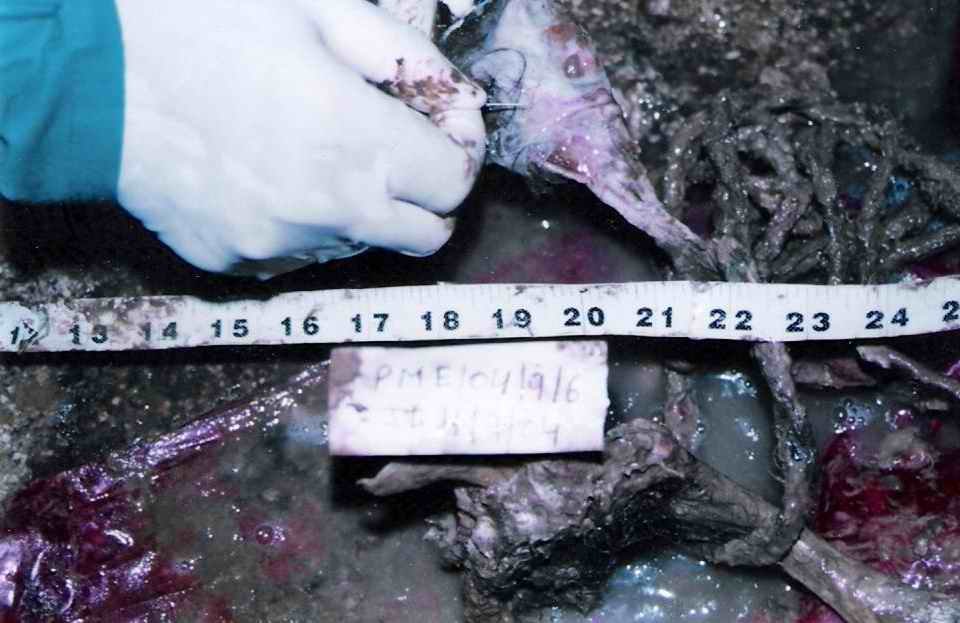
Figure 3. Depicting frank ecchymosis in the available neck tissues.
The victim was murdered by strangulation by ligature and then buried in a pit in the courtyard of his own house by his wife and her relatives. The body was exhumed after 4 months by the police. Even after such a long duration, tell-tale signs of the crime persisted such as ecchymosis in remnants of the available neck and deep laryngo-tracheal structures. The ligature material was found in situ. This led to the conclusion of death by ligature strangulation.
Conclusion
If a case is thoroughly investigated by the agencies and post-mortem is conducted with care, skill and a open mind, no criminal is clever enough to deceive the autopsy surgeon as even after 4 months of the murder, ecchymosis could be appreciated in this case as depicted in the photographs taken during the autopsy.
Figure 4a and 4b. Showing ecchymosis in laryngeal structures visualized even after 6 months in a gutter in this skeletonized body.
Figure 5a and 5b. Showing ecchymosis in laryngeal structures visualized even after 6 months in a gutter in this skeletonized body.
How to cite this paper
Sirohiwal BL, Sirohiwal D, Sharma LK, Paliwal PK, Sirohiwal S. A Case Of Strangulation In A Skeletonised Body Exhumed From A Pit. Anil Aggrawal's Internet Journal of Forensic Medicine and Toxicology [serial online], 2008; Vol. 9, No. 1 (January – June 2008): [about 6 p]. Available from: https://www.anilaggrawal.com/ij/vol_009_no_001/papers/paper002.html