

The Case
A 30 year old man found lying supine under a shattered, burned tree after a thunderstorm, medical history and medications unknown. The clothing and personal effects were soaked. Focally, there were burn marks on the shirt of the decedent.
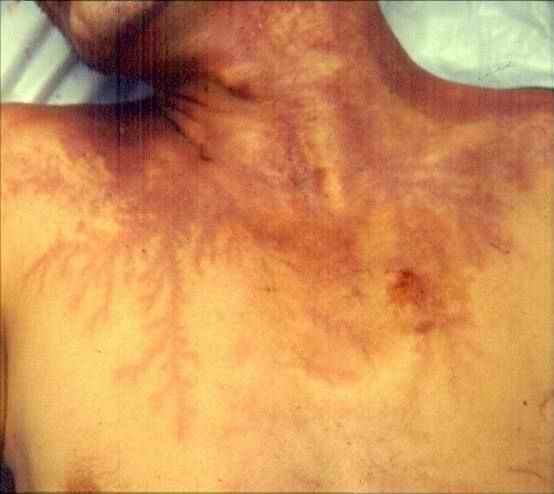
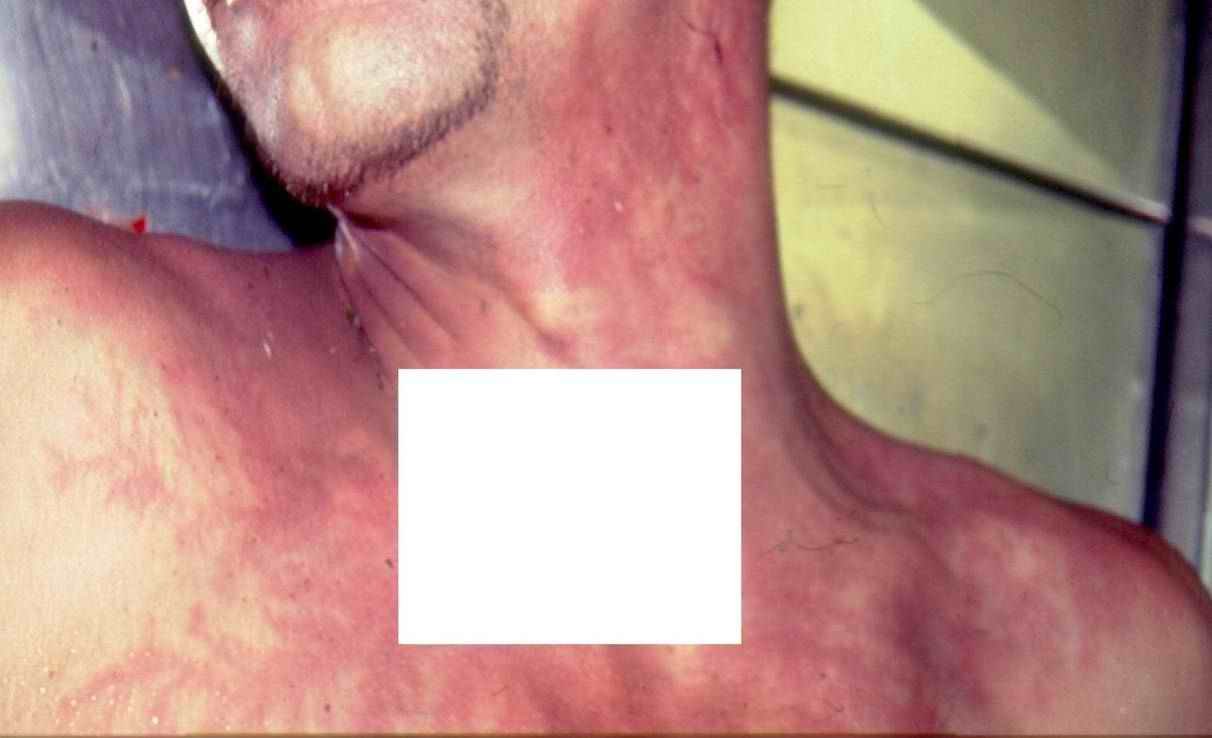
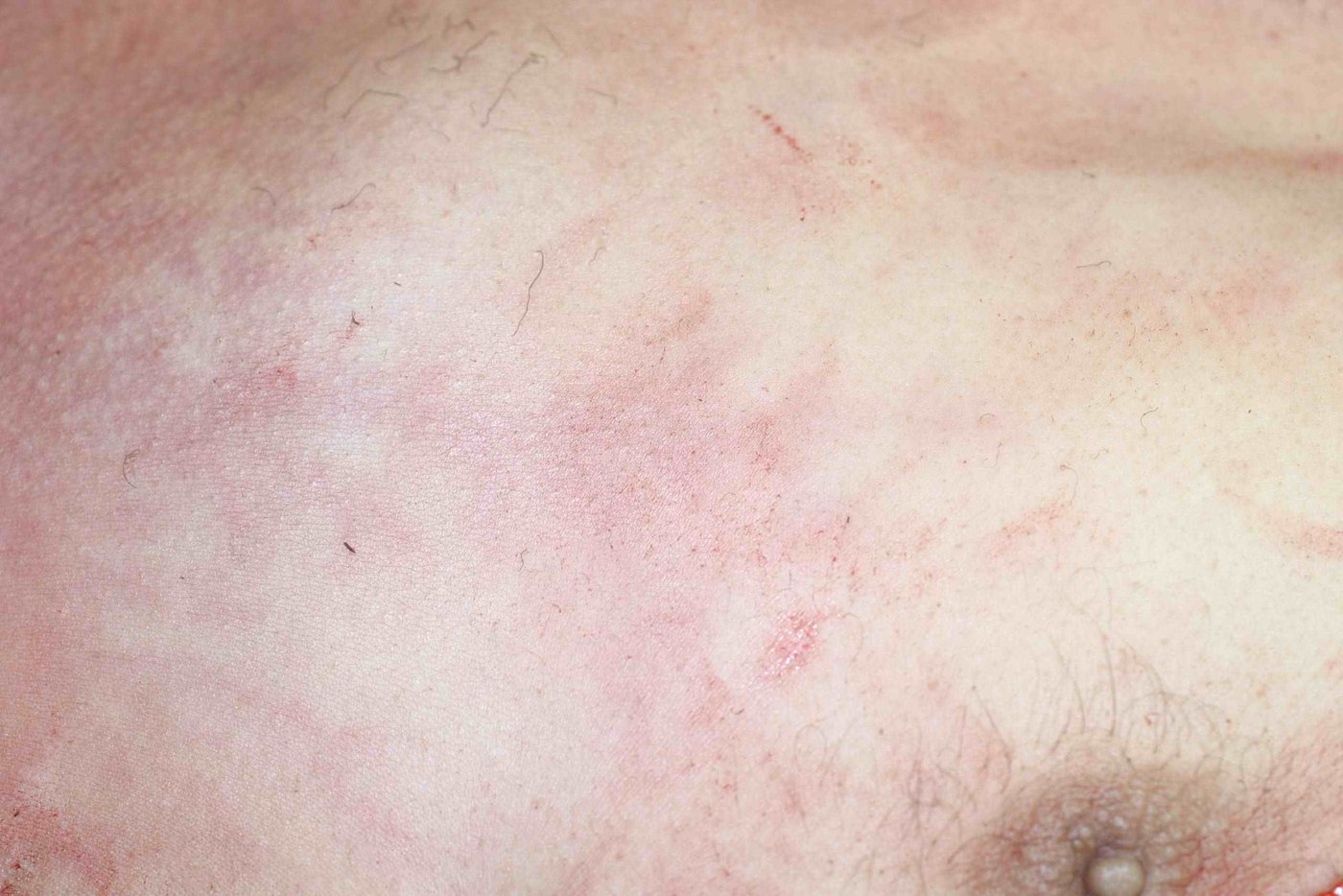
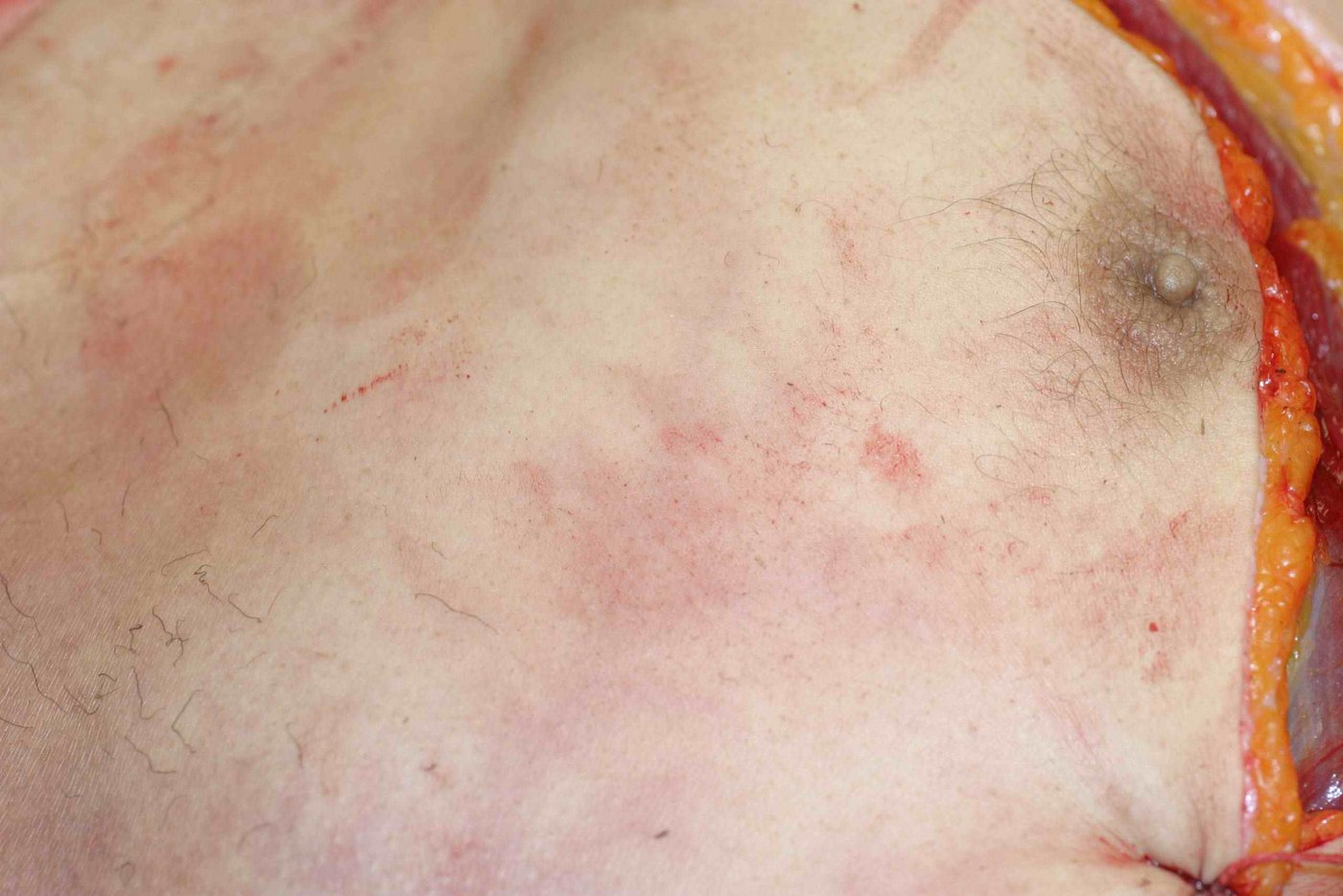
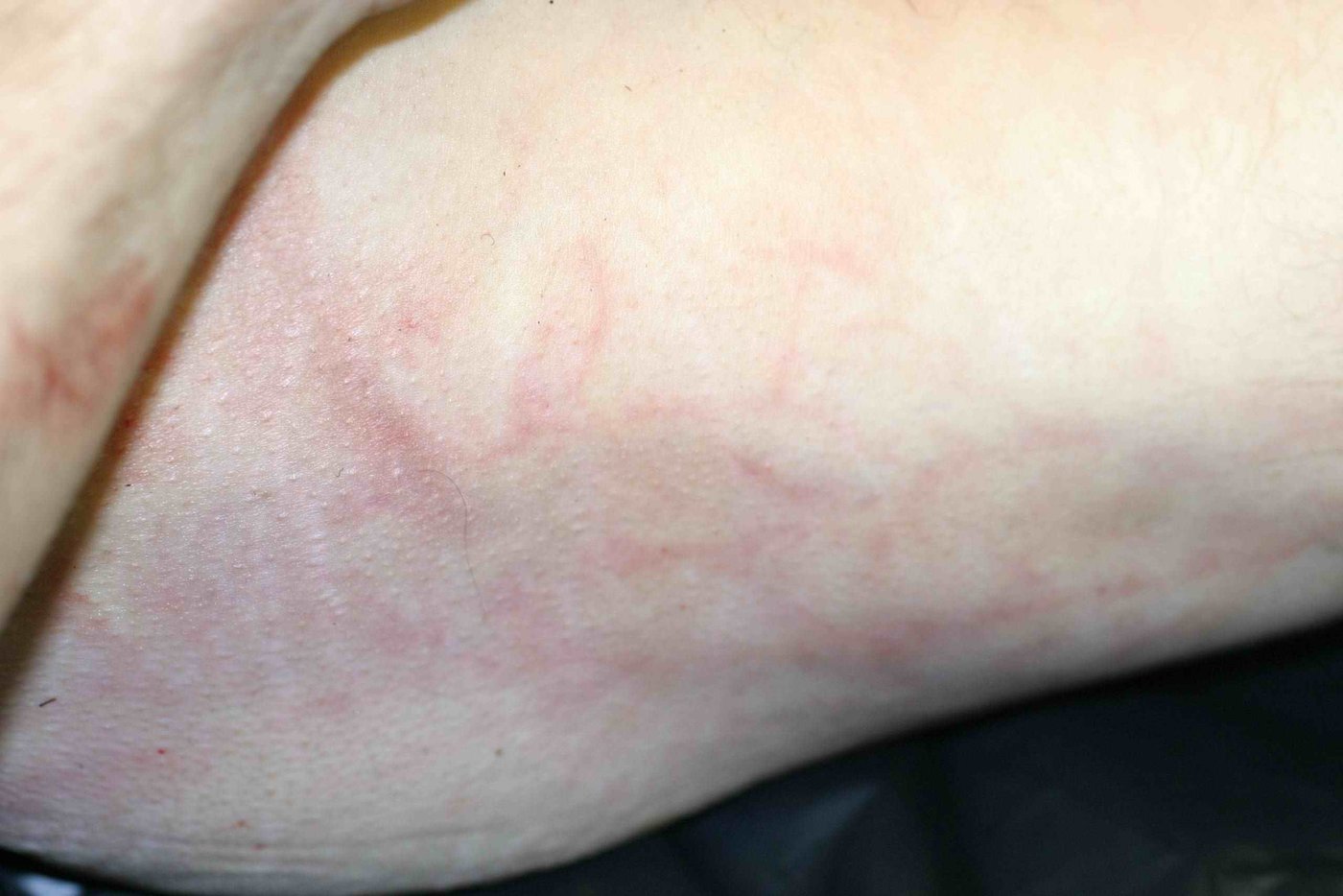
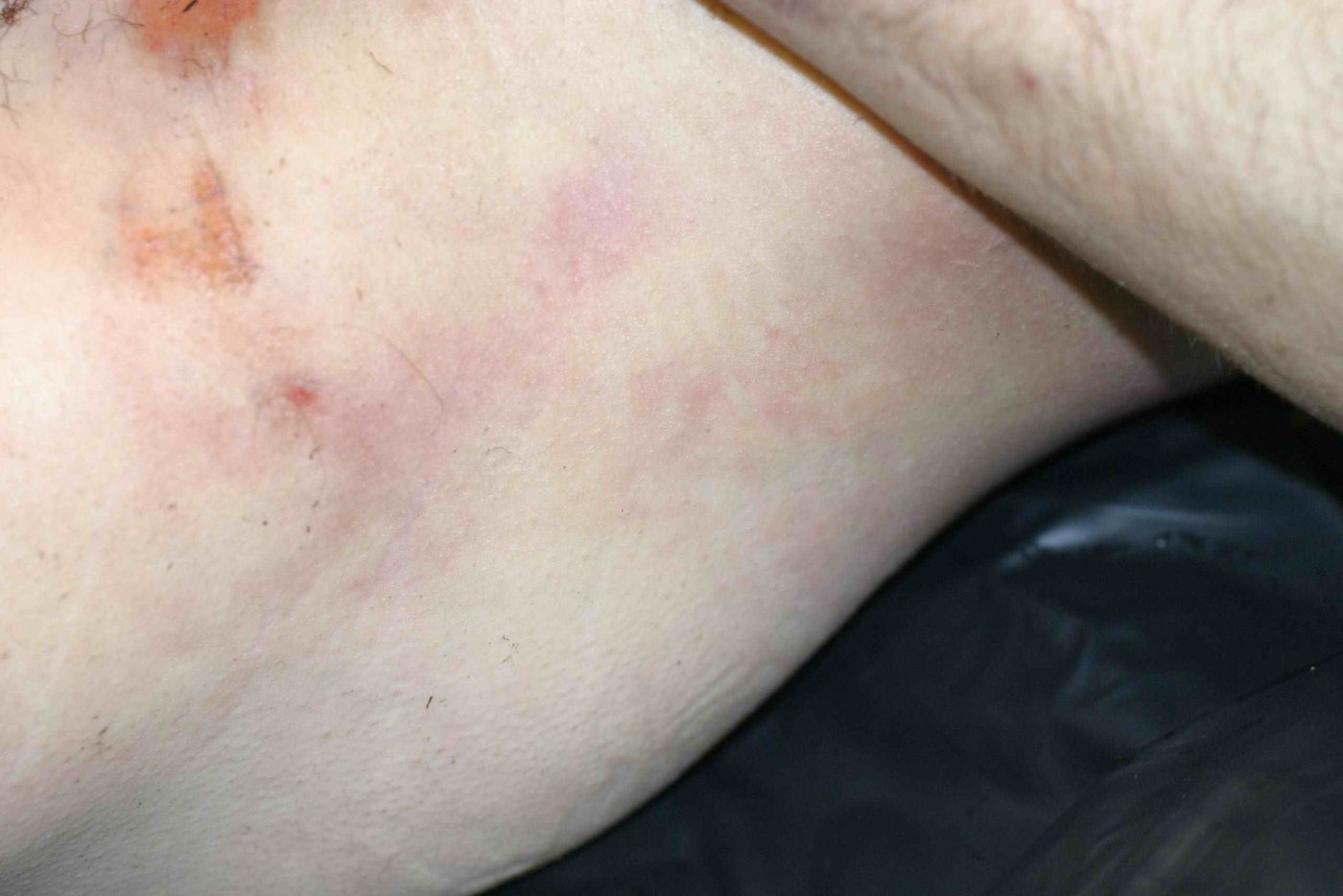
The autopsy showed broad, patchy arborescent erythema of the neck and anterior torso consistent with lightning injury, with minor abrasions of the neck and face. Hairs on the anterior chest were singed. No internal injuries were identified. No natural disease was identified. Toxicology testing showed that the decedent had been using alcohol and marijuana.
Gross Inspection and Microscopic Evaluation
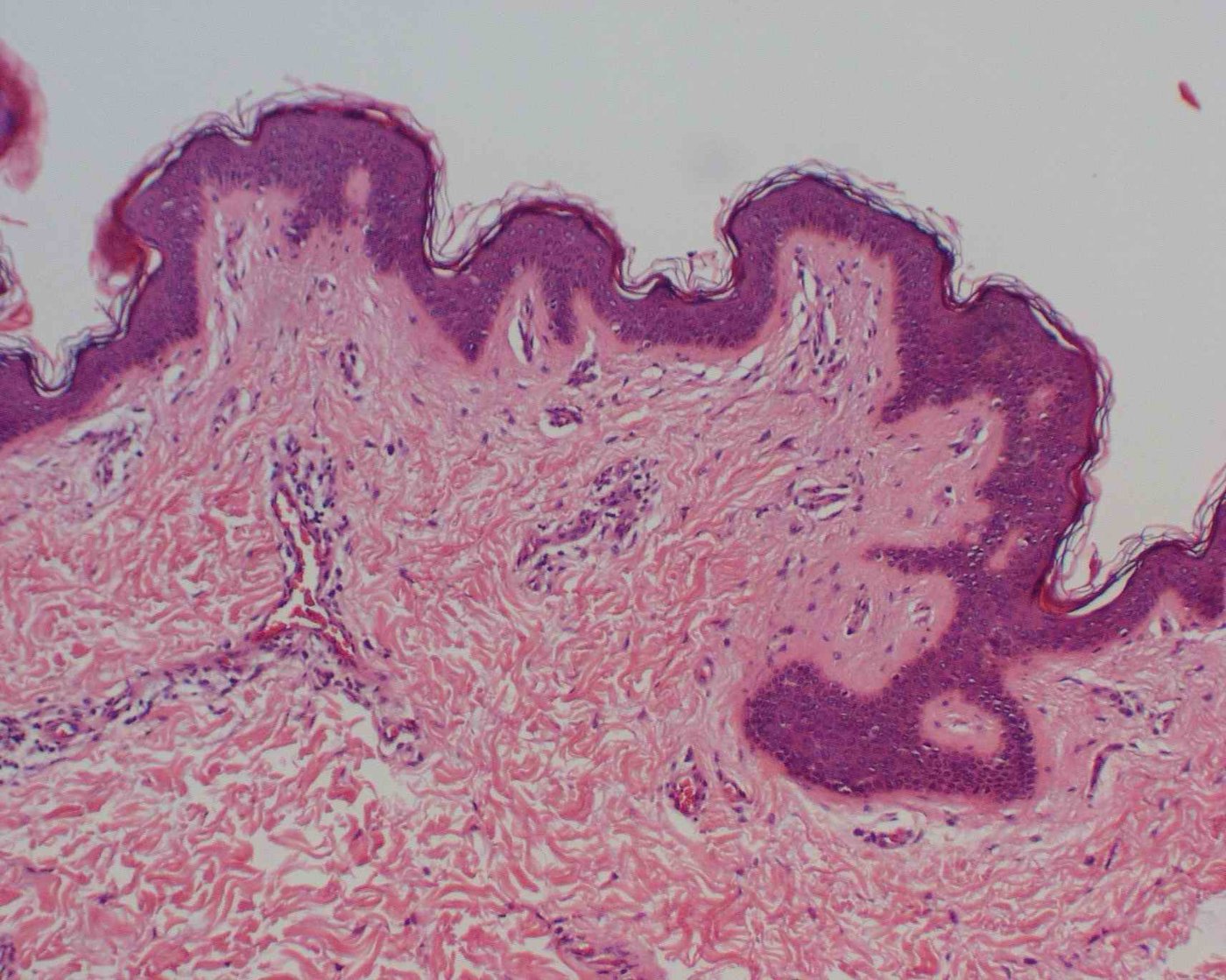
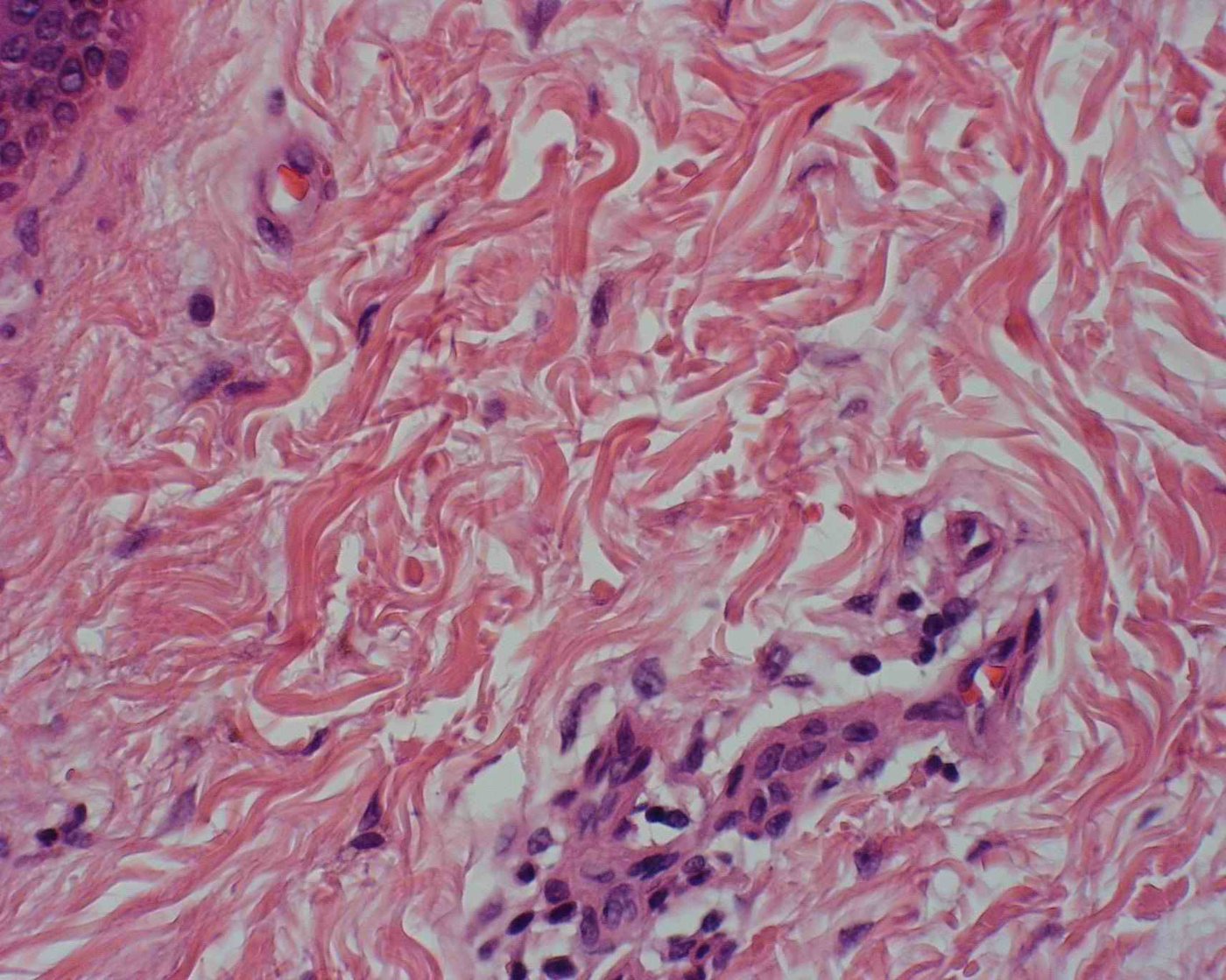
Gross inspection and microscopic evaluation revealed findings which are best seen in the pictures here.
Discussion
Arborescent erythema of skin due to lightning strike is analogous to Lichtenberg figures. Lichtenberg Figures are branching, tree or fern-like patterns that form as the result of high voltage discharge on, or within, insulating materials1. The first Lichtenberg Figures were 2-dimensional patterns formed in dust on the surface of a charged plate in the laboratory of their discoverer, the German physicist Georg Christoph Lichtenberg (1742-1799)1. Professor Lichtenberg made this observation in the late 1700's. The basic principles involved in the formation of these electrostatic figures later evolved to become modern xerography1. A similar pattern of cutaneous arborescent thermal injury is observed in human beings with lightning injury. This is a phenomenon that appears to persist for approximately 24 hours.
Cutaneous keraunographic marking of the skin, a superficial arborescent erythema, is a rare pattern of injury associated with victims of lightning injury2. Though an infrequent finding, it is considered pathognomonic of lightning injury. We present a second documentation of the anatomic and microscopic depiction of this phenomenon.
A previous case report with microscopic sections reveals identical findings of skin with extravasation of red blood cells3. No epidermal changes characteristic of electrothermal injuries were identified3,4. An iron stain showed no evidence of old hemorrhage. The finding of extravasated red blood cells appears to be the only microscopic correlation with the anatomic finding of arborescent erythema. The etiology of the erythema appears to be a displacement of red blood cells from superficial blood vessels in a pattern analogous to that observed with the distribution of particles in Lichtenberg figures. The reason for the transient nature and exact mechanism is unknown.
References
- Hickman B. What are Lichtenberg Figures and how are they created? [homepage on the Internet]. Stoneridge Engineering - Wreaking havoc with electrons for over forty years; 1999-2006 [updated 2006 April 6; cited 2006 Aug 26]. Available from: http://teslamania.delete.org/frames/lichtenbergs.html (pdf file of the same page available from http://teslamania.delete.org/photos/lichtenbergs.pdf). ↑
- Wetli C. Keraunopathology An analysis of 45 Fatalities. Am J Forensic Med Pathol, 1996; 17(2): 89-98.. PubMed ↑
- Resnik B., Wetli C., Lichtenberg Figures Am J Forensic Med Pathol, 1996; 17(2): 99-102. PubMed ↑
- Mellen P.F., Weedn V.W., Kao G., Electrocution: a review of 155 cases with emphasis on human factors. J Forensic Sci, 1992; 37 (4): 1016-1022. PubMed ↑